Destinations
Visiting the Netherlands: Your Complete Trip-Planning Guide
Amsterdam's canals, spring tulip fields and a string of historic cities just a short train ride apart make the Netherlands one of Europe's easiest countries to explore without a car. Here's what you need to pick your season, trip length, transportation and home base.
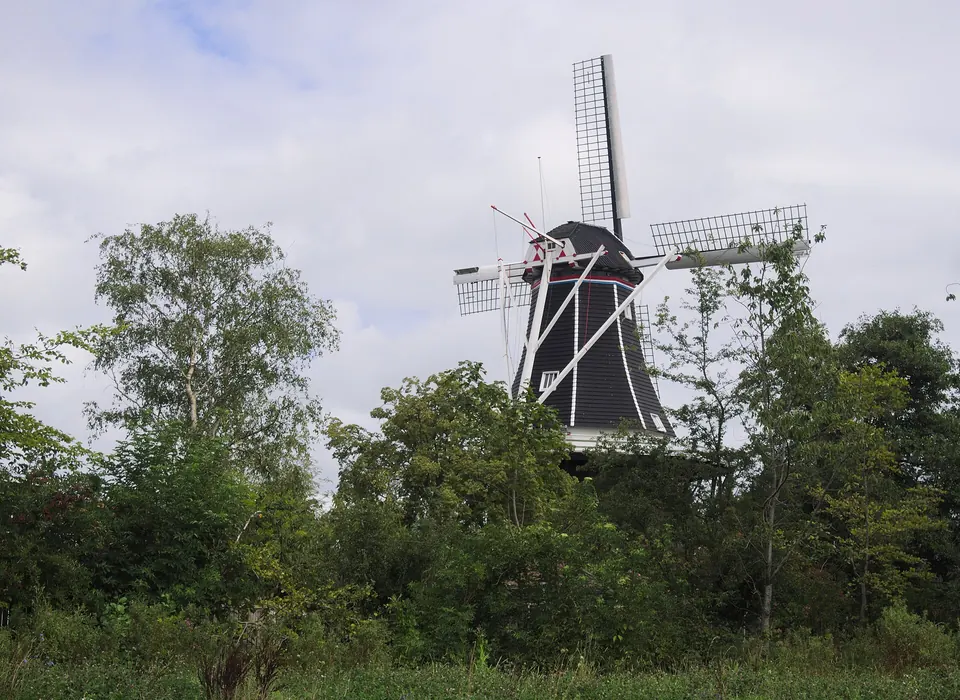
Photo : C messier · CC BY-SA 4.0 · Wikimedia Commons
Where to go in Netherlands
Why visit the Netherlands
The Netherlands packs an unusual density of world-class museums, historic towns and water-shaped landscapes into a compact country. Frequent trains and an extensive bike-lane network let you hop between cities without renting a car, which makes it an easy first stop in Europe or a natural add-on to a trip to Paris, Brussels or London.
Think of the country in a few broad areas:
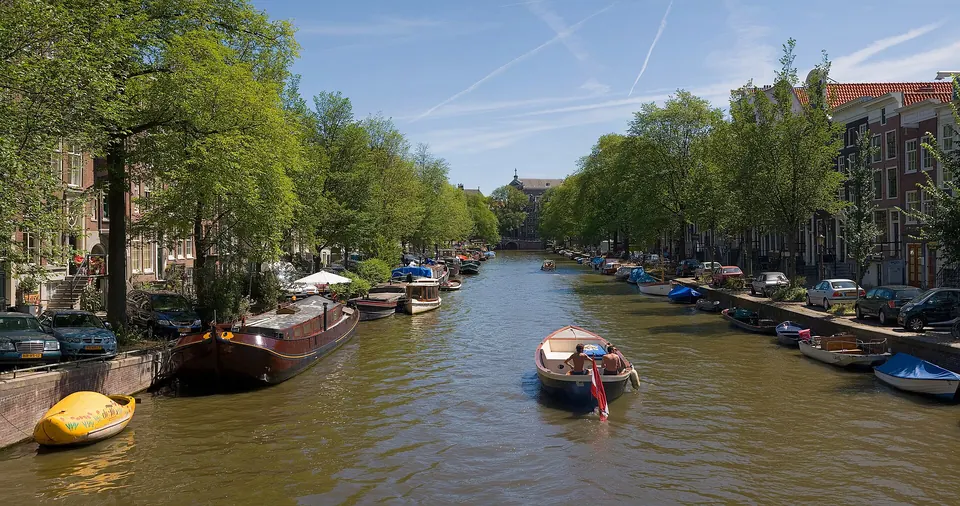
- Amsterdam, the capital, with its canals, major museums and very different neighborhoods; our complete Amsterdam travel guide covers it in detail.
- The Randstad, the urban crescent in the west: Haarlem, Leiden, The Hague, Delft, Rotterdam and Utrecht, each with its own personality (bold modern architecture in Rotterdam, government buildings and a beach in The Hague, two-level canals in Utrecht).
- The bulb region between Haarlem and Leiden, home to Keukenhof gardens in spring.
- The north and the Wadden Islands (Texel in particular) for beaches, nature and cycling.
- The south and east: hilly Maastricht and Limburg, or Hoge Veluwe National Park in Gelderland.
Best time to go
Expect a mild, changeable maritime climate year-round. According to long-term averages from the Dutch weather service (KNMI) at De Bilt, the mean temperature is around 64°F (18°C) in July and 38°F (3°C) in January. Pack a rain jacket whatever the season.
- Spring (March–May): flower season. In 2027, Keukenhof is open March 18 to May 9, according to the official Keukenhof website. King's Day (Koningsdag) on Tuesday, April 27, 2027, turns cities, especially Amsterdam, into a giant street party; book lodging early.
- Summer (June–August): long evenings, outdoor cafés and North Sea beaches, but also the biggest crowds.
- Fall: fewer visitors and soft light on the canals; a great time for museums.
- Winter: short days but quiet cities, with holiday markets and light displays in December.
How many days do you need?
- 3–4 days: Amsterdam plus one day trip (Haarlem, Zaanse Schans or, in spring, Keukenhof).
- One week: Amsterdam followed by two or three Randstad cities (Utrecht, The Hague and Delft, Rotterdam), all easy to link by train.
- 10–14 days: add the north (Friesland, Wadden Islands) or the south (Maastricht), or plan a cycling trip.
Getting there and getting around
Flights and entry rules
Amsterdam Airport Schiphol is the main international gateway, with nonstop flights from several US hubs. A direct train runs from the airport to Amsterdam Centraal station in about 15 minutes. The Netherlands is in the Schengen Area: with a US passport, you can stay up to 90 days in any 180-day period without a visa, and the US State Department advises that your passport be valid for at least three months beyond your planned departure from Schengen. The EU's ETIAS travel authorization is not yet in operation and has no confirmed start date; check the official ETIAS website before you go.
Getting around
Trains run by NS are the simplest way to travel between cities, and most major Randstad cities are under an hour from Amsterdam. You don't need a local transit card: with OVpay, you tap in and out with a contactless credit or debit card or your phone, as long as you use the same card or device at both ends. Inside cities, trams, buses and bikes take over. A car is of little use in city centers, where parking is scarce and expensive.
Budget essentials
The Netherlands is a relatively expensive destination, especially for lodging in Amsterdam. Two recent changes affect your bill:
- VAT on accommodations rose from 9% to 21% on January 1, 2026.
- Amsterdam's tourist tax is 12.5% of the room rate (before VAT) in 2026, and the city council has approved a rise to 16% for 2027. Each municipality sets its own rate.
To save money, stay in another Randstad city and commute by train, travel off-season and use bikes and public transit. Cards are the norm, and some businesses don't take cash at all, so bring a card with no foreign transaction fees.
Where to stay: main areas
| Area | Best for |
|---|---|
| Amsterdam | First-timers, museums, nightlife; most expensive |
| Haarlem, Leiden | Quieter base near Amsterdam and the bulb fields |
| Utrecht | Central rail hub, lively student atmosphere |
| The Hague, Delft, Rotterdam | Architecture, museums, Scheveningen beach |
| Maastricht, Wadden Islands | A dedicated stay off the classic route |
For a first visit, Amsterdam is the most convenient base; see our Amsterdam guide to choose the right neighborhood.