 Amalfi Coast
 Airport: Naples or Salerno?
No airport in Amalfi: you fly into Naples or Salerno, then change in Sorrento or Salerno.
Italy
Between Positano and Vietri sul Mare, the Amalfi Coast strings together cliffside villages, terraced lemon groves and coves beneath the Lattari Mountains. Here is what you need to pick your season, your base and the best way to get around a coastline as beautiful as it is congested.
Photo : Mайкл Гиммельфарб · CC BY-SA 4.0 · Wikimedia Commons
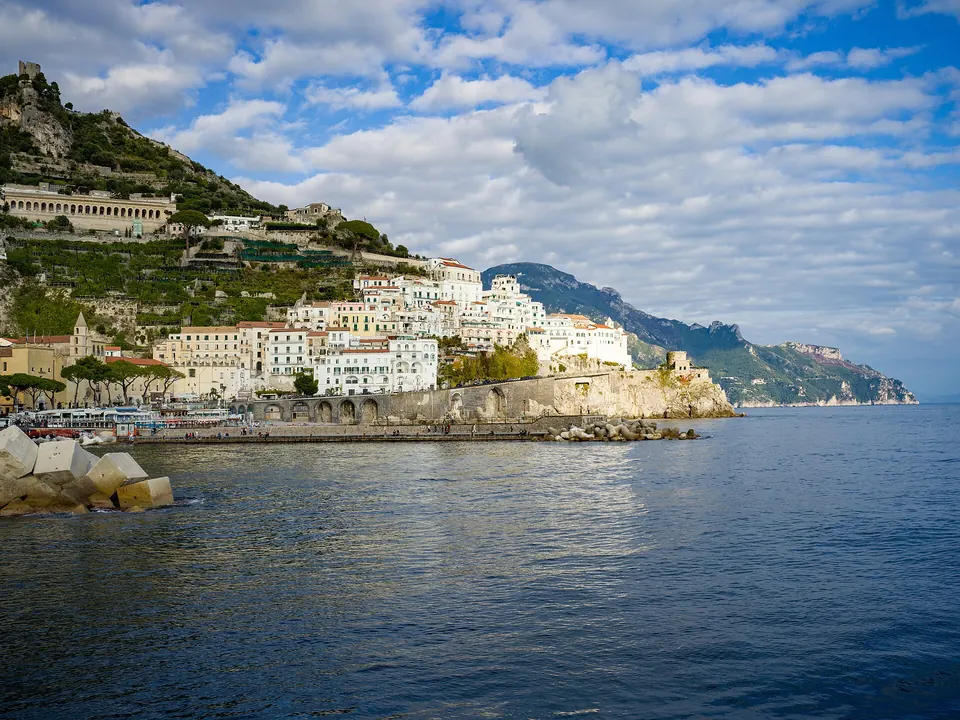
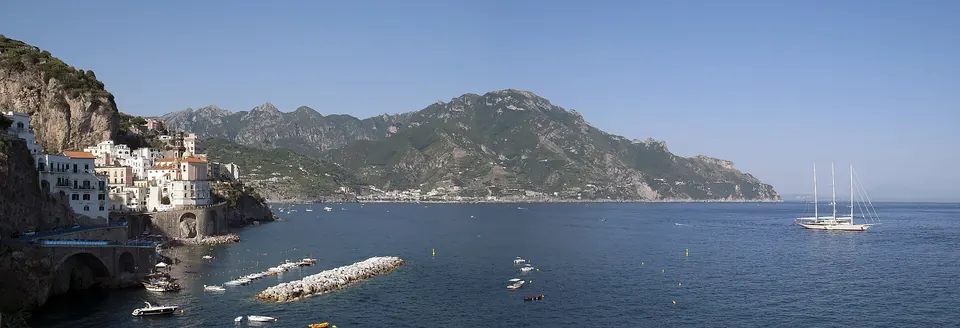
A UNESCO World Heritage Site since 1997, the Costiera Amalfitana runs along the southern side of the Sorrento Peninsula, in the province of Salerno. What sets it apart is the whole picture rather than any one beach: villages stacked up the cliffs, farm terraces carved into the slopes (lemons, vines, vegetable gardens) and a corniche road tying it all together.
Each town has its own character:
The coast pairs easily with Naples, Pompeii or Capri as part of a wider trip to Italy.
The sweet spots are spring (April to June) and early fall (September to October): swimming is possible from late spring, the trails are in good shape and the ferries are running. Coastal ferries operate mainly from April through October.
July and August bring the biggest crowds, the highest prices and gridlocked roads. From November to March the coast is quiet, but many hotels and restaurants close and ferry service is cut back or suspended: it is a season for walking and seeing the villages without crowds, not for the beach.
Plan on 3 to 5 days for a first visit. Three days covers Amalfi and Atrani, a trip up to Ravello and a day in Positano. With five, add the Path of the Gods, a boat trip or Capri, and half a day in the eastern villages (Minori, Maiori, Cetara). Travel times are slow, so switching bases often is not worth it.
Most US itineraries connect through a European hub to Naples, or land in Rome and continue by high-speed train to Naples or Salerno. Naples airport is the main gateway, with buses, trains (to Sorrento or Salerno) or private transfers onward. Salerno airport, closer to the eastern end of the coast, has a seasonal schedule that has changed a lot from year to year; our guide on which airport to choose for the Amalfi Coast, Naples or Salerno compares both. With a US passport you can stay up to 90 days in any 180-day period in the Schengen area without a visa. The EU's ETIAS travel authorization is due to launch in late 2026: check the official ETIAS website before you book.
SITA Sud buses link Sorrento, Positano, Amalfi, Ravello and Salerno. Buy tickets before boarding (tobacco shops, newsstands, the UnicoCampania app). In 2026 the COSTIERASITA pass costs €10 for 24 hours of unlimited rides. In summer, buses often fill up leaving Amalfi and Positano, so build in extra time.
In season, boats (Travelmar among them) connect Salerno, Maiori, Minori, Amalfi and Positano, with routes to Capri. They are often the most pleasant and reliable way to hop between towns.
The SS163 "Amalfitana" road is narrow and winding, and parking is scarce and expensive. In peak season, an odd-even license plate rule applies between Vietri sul Mare and Positano from 10 a.m. to 6 p.m., with dates set each year by Anas and the local towns. Residents, taxis and licensed private drivers (NCC) are exempt. Unless you have a specific reason, a rental car is more hassle than help here.
| Area | Best for | Keep in mind |
|---|---|---|
| Positano and Praiano | Couples, views | Lots of stairs, high prices |
| Amalfi and Atrani | First trip without a car | Bus and ferry hub |
| Ravello | Quiet, gardens, concerts | Up in the hills, away from the sea |
| Minori, Maiori, Cetara | Families, mid-range budgets | Wider beaches, ferries to Amalfi |
| Sorrento or Salerno | Tighter budgets, train travelers | Off the coast, daily commutes |
For a first car-free visit, Amalfi is the most practical base thanks to its connections. Staying in Salerno or Sorrento cuts costs, at the price of longer travel days.
The Amalfi Coast is one of Italy's most expensive destinations, especially for hotels in Positano and Ravello in July and August. Public transportation stays affordable: the €10 COSTIERASITA day pass covers as many bus rides as you like. Ferries cost noticeably more than the bus but skip the traffic. To keep costs down, travel in May, June or September, stay in the eastern villages or Salerno, and book early for summer. Expect a local hotel tax on top of your nightly rate.