 Venice
 Airport to City Center: Bus, Boat, Prices 2026
ATVO bus (€12) or ACTV Aerobus (€10) to Piazzale Roma in about 20 minutes, or the Alilaguna boat (€18) to the center: Venice airport transfers compared.
Italy
No cars, canals instead of streets and a lagoon dotted with islands: Venice is explored on foot and by boat. Here is everything you need to plan your trip, from the best season and entry rules to getting around, budget and where to stay.
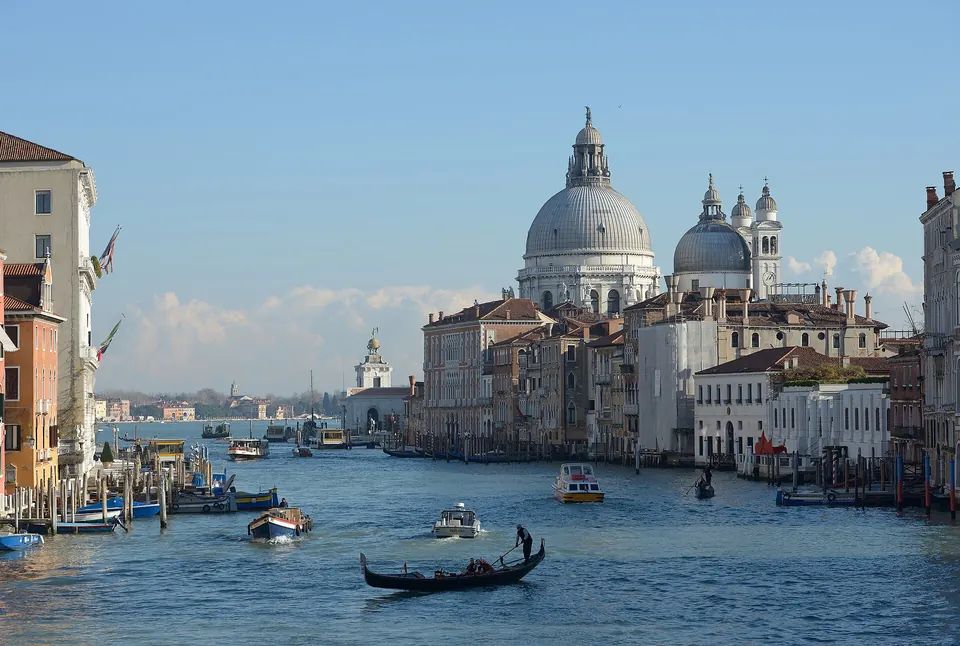
Photo : This Photo was taken by Wolfgang Moroder. Feel free to use my photos, but please mention me as the author and send me · CC BY-SA 3.0 · Wikimedia Commons
VeniceATVO bus (€12) or ACTV Aerobus (€10) to Piazzale Roma in about 20 minutes, or the Alilaguna boat (€18) to the center: Venice airport transfers compared.
 Venice
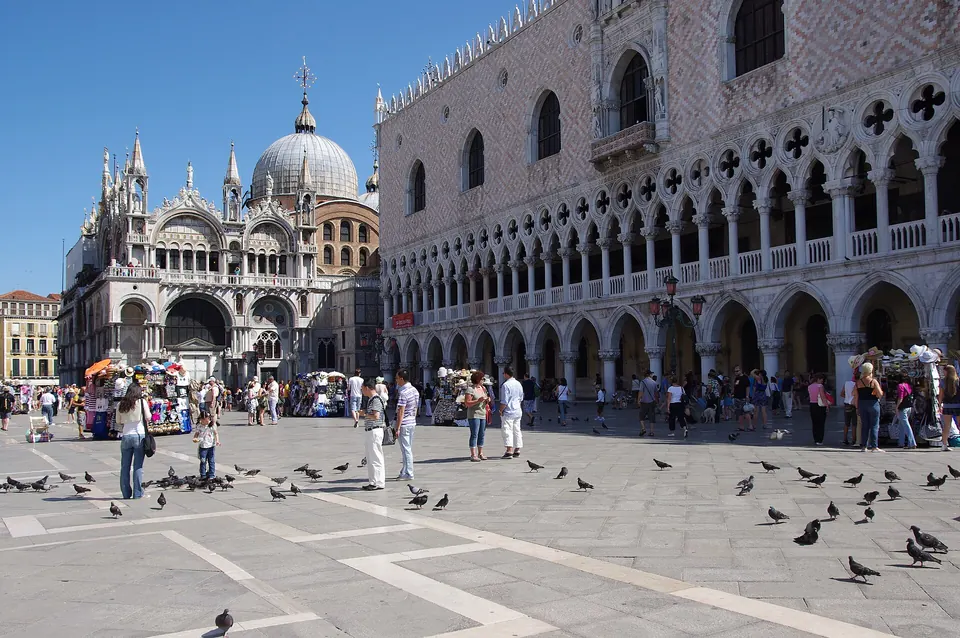
St. Mark's, Grand Canal, Rialto, Dorsoduro and the lagoon islands: the 12 sights to see in Venice in 3 days, with checked prices.
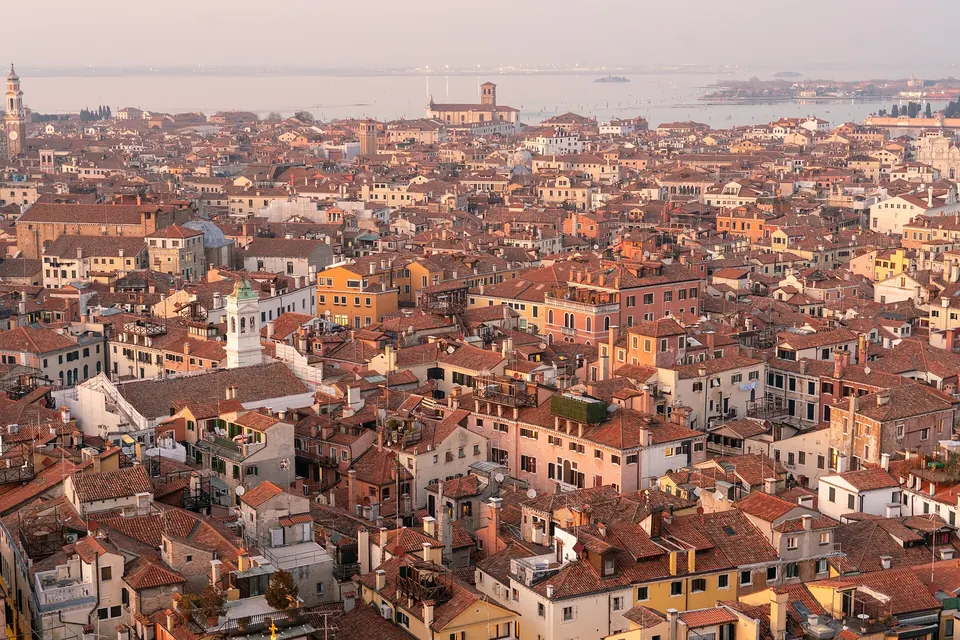
Built on an archipelago in the middle of a lagoon, Venice is a car-free city you explore on foot, over bridges and through narrow alleys (calli), or by vaporetto (water bus) along the Grand Canal. The historic center is divided into six districts, the sestieri: Cannaregio, Castello, Dorsoduro, San Marco, San Polo and Santa Croce. Beyond them, the lagoon islands each have their own character: Murano and its glassblowing, Burano and its brightly painted houses, quiet Torcello and the beaches of the Lido.
St. Mark's Basilica, the Doge's Palace, the Rialto Bridge, the Gallerie dell'Accademia, the Peggy Guggenheim Collection: to prioritize your visits and check hours and ticket prices, see our list of 12 must-see Venice attractions with 2026 prices. Venice also fits easily into a longer itinerary; find more destinations in our Italy travel guide.
Spring (April to June) and early fall (September and October) offer the best balance of weather and crowds, which also makes them the most popular months to book. Summer is hot and very busy. Winter is quieter and often cheaper, but it is also acqua alta season, when high tides can temporarily flood low-lying areas such as St. Mark's Square.
Big events shape the calendar: Carnival in the days leading up to Mardi Gras, the Biennale (art in even years, architecture in odd years), the Redentore festival in July and the Regata Storica in September. Hotel prices rise around these dates, so book early.
Venice charges an access fee (contributo di accesso) to day visitors who don't stay overnight. In 2026 it applied on 60 days between April 3 and July 26, from 8:30 a.m. to 4 p.m., to visitors over 14 entering the historic center: €5 if paid in advance, €10 within the last four days before your visit. The islands (Murano, Burano, Torcello, Lido) are not included. If you stay overnight anywhere in the municipality, you are exempt but still need to register. Each year's calendar is posted on the official Venice access fee portal; check it before you lock in your dates.
One day barely covers St. Mark's, the Rialto and a ride down the Grand Canal, right when day-trippers flood in. Plan on 2 to 3 days to see the major sights at a comfortable pace and wander quieter districts like Cannaregio and Castello, and 4 days or more to add the lagoon islands. Staying overnight also lets you enjoy the city early in the morning and in the evening, when it empties out.
Venice Marco Polo Airport, on the mainland, is the main gateway. Delta flies nonstop from New York JFK, and US carriers add seasonal nonstops from other hubs in the warmer months; otherwise, connect through a major European hub. From Marco Polo, buses run to Piazzale Roma and boats go straight to several stops in the city. Compare travel times, fares and tips in our guide to getting from Venice airport to the city center by bus or boat.
US passport holders can visit the Schengen area, which includes Italy, visa-free for up to 90 days in any 180-day period. The EU's Entry/Exit System now records your entry digitally at the border, and the future ETIAS travel authorization is not yet required; check the official ETIAS website for the latest before you fly.
Venezia Santa Lucia station opens right onto the Grand Canal. High-speed trains reach it from Milan in about 2.5 hours and from Rome in about 4 hours. Don't get off too early: Venezia Mestre is the mainland station, not the historic center.
In the historic center, expect to walk a lot. ACTV vaporetti serve the Grand Canal and the islands: a single ticket valid for 75 minutes costs €9.50 and a 24-hour pass €25, with multi-day passes also available. Validate your ticket every time you board. To decide between a transit-only pass and a combined transit-and-museum card, read our guide on which Venice pass to buy.
Venice is one of Italy's most expensive cities, especially for lodging in the historic center. Main costs to plan for:
To save money, travel off-season or midweek, or stay in Mestre on the mainland, linked to the historic center by train, bus and tram.
| Area | Best for | Good to know |
|---|---|---|
| San Marco | Short first visits | Right by the main sights, but the priciest and busiest |
| Cannaregio | Train arrivals, local atmosphere | Close to Santa Lucia station |
| Dorsoduro | Art and museum lovers | Walk to the Accademia and the Guggenheim |
| Castello | Travelers who want quiet | More residential, farther from the station |
| San Polo and Santa Croce | A central middle ground | Around the Rialto; Santa Croce is near Piazzale Roma |
| Lido and Giudecca | Longer, slower stays | You'll rely on the vaporetto |
| Mestre | Tighter budgets | Outside the historic center; daily commute |
If you're bringing suitcases, pick a place near a vaporetto stop: Venice's stepped bridges make long walks with luggage exhausting.