 Sicily
10 Days in Sicily: Day-by-Day Itinerary by Car or Train
Palermo, Agrigento, Val di Noto, Syracuse, Etna and Taormina: a 10-day Sicily itinerary with travel times.
Italy
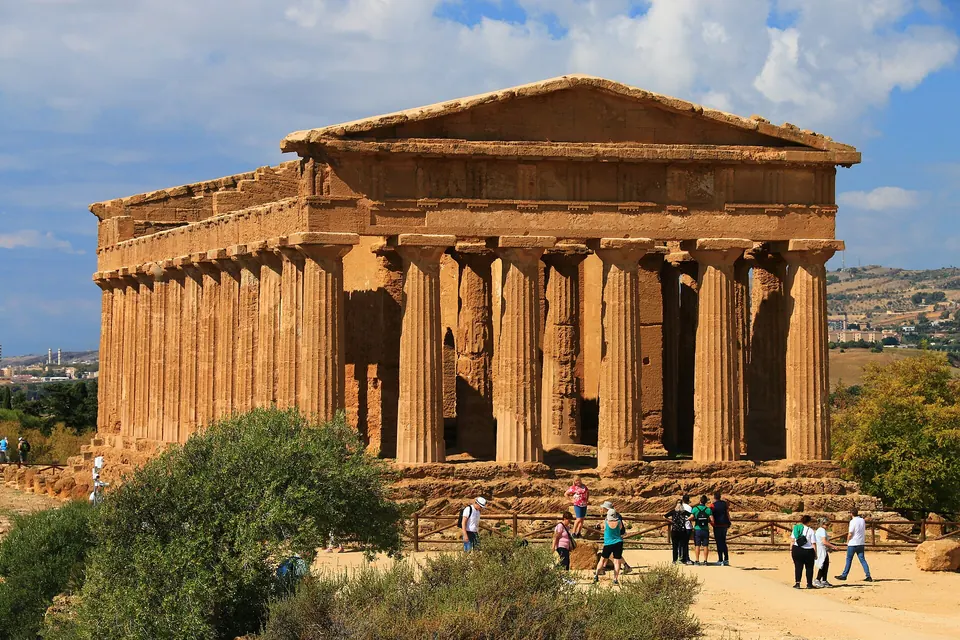
Greek temples, Roman mosaics, Arab-Norman churches, Baroque towns and an active volcano: Sicily packs seven World Heritage sites onto a single island. Here's the big picture on seasons, trip length, airports and where to base yourself, before you dive into our detailed itineraries.
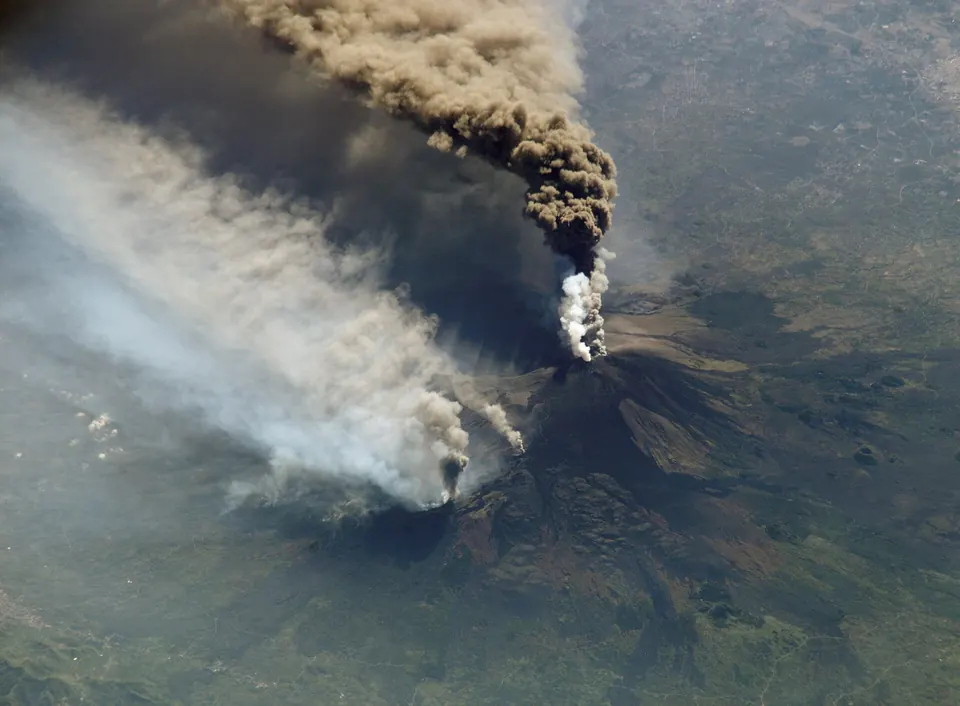
Photo : NASA · Public domain · Wikimedia Commons
SicilyPalermo, Agrigento, Val di Noto, Syracuse, Etna and Taormina: a 10-day Sicily itinerary with travel times.
 Sicily
Palermo, Agrigento, Syracuse, Noto, Etna and Taormina in 7 days: the route, drive times and a car-free option.
The largest island in the Mediterranean, Sicily is rarely seen in one quick sweep: the distances, slow inland roads and sheer density of sights reward travelers who pick one side of the island or give themselves time. This guide covers the essentials; day-by-day itineraries and month-by-month weather have their own guides, and the rest of the country is covered in our Italy travel guide.
Few places in Europe layer so many civilizations into such a compact area. The island has seven properties on the UNESCO World Heritage List:
Add Palermo's street markets, Taormina's clifftop views over the sea, Erice and Segesta in the west, the salt pans between Trapani and Marsala, the Egadi Islands, and a regional food culture that justifies plenty of detours on its own.
Spring (April to June) and early fall (September and October) are the sweet spots: manageable heat for exploring sun-baked archaeological sites, pleasant sea conditions at the end of spring and start of fall, and smaller crowds than in summer.
July and August are hot and busy, especially on the coast and the islands, with peak prices; still, it's the easiest season for the Aeolian and Egadi Islands. Winter stays mild along the coast and works well for city sightseeing, but ferry and hydrofoil service to the smaller islands is often reduced and Etna can be snow-capped. For temperatures in °F (°C), rainfall and sea temperatures, see our Sicily weather by month guide.
Sicily takes longer to cross than the map suggests: winding back roads, pedestrian historic centers, and sites that easily fill half a day. One side of the island seen well beats the whole island rushed.
According to the regional tourism board, Visit Sicily, the island has four airports: Palermo (west), Catania (east and Etna), Trapani-Birgi (west coast and Egadi Islands) and Comiso (the Baroque southeast). Palermo and Catania have the most year-round routes, including domestic flights from Rome and Milan, and the tourism board also lists direct flights to New York; otherwise, plan on connecting through Rome, Milan or another European hub. An open-jaw ticket, into Palermo and out of Catania or vice versa, saves backtracking.
From mainland Italy, car ferries cross the Strait of Messina from Villa San Giovanni in Calabria in about 20 minutes to Messina's Rada San Francesco port, with departures around the clock from the main operator. Overnight ferries also link Palermo with mainland ports such as Naples and Genoa.
A rental car is the most flexible option for the interior, the south coast and the Val di Noto; watch out for the limited-traffic zones (ZTL) in historic centers, which are off-limits to non-resident drivers. Note that U.S. drivers in Italy are generally expected to carry an International Driving Permit along with their state license. Trains connect the main cities (a direct regional train takes about 3 hours between Palermo and Catania), and buses fill the gaps, notably to Taormina, Agrigento and Syracuse. Ferries and hydrofoils serve the islands from Milazzo, Trapani and Palermo.
| Area | Best for | Nearby |
|---|---|---|
| Palermo | City base for the west and north | Monreale, Cefalù, Segesta |
| Trapani / Marsala | West coast, salt pans, islands | Erice, Egadi Islands, Mozia |
| Agrigento | Stopover on the south coast | Valley of the Temples, Scala dei Turchi |
| Syracuse (Ortigia) | Baroque and ancient southeast | Noto, Modica, Ragusa, Pantalica |
| Catania / Taormina | East coast and the volcano | Mount Etna, Alcantara Gorge |
| Lipari | Base in the Aeolian Islands | Vulcano, Salina, Stromboli |
For a loop trip, two or three bases usually do the job: Palermo in the west, Syracuse or Catania in the east, with a night in Agrigento in between.
Prices swing sharply with the season: July, August and Italian public holidays are the most expensive, especially on the islands and in Taormina, where booking early pays off. Budget extra for car rental, gas, site and museum tickets, and the tourist tax many towns charge per person per night, paid at your lodging (in Palermo it tops out at €5 depending on the type of accommodation).
Italy is part of the Schengen Area: with a U.S. passport you can visit without a visa for up to 90 days in any 180-day period. Your passport should be valid for at least three months beyond your planned departure from the Schengen Area. The EU's Entry/Exit System now records non-EU travelers' fingerprints and photo at the border, so allow extra time. The ETIAS travel authorization was not yet in operation as of November 2026; check the official ETIAS page before you book. On Etna, access to the summit craters is governed by rules that change with volcanic activity; check locally before any excursion.