 Finland
Best Time to Visit Finland: Month-by-Month Guide
June-Aug for summer and midnight sun; late Aug-early Apr for auroras; Feb-Mar for snow.
Destinations
Endless lakes, forests open to everyone, northern lights in winter and the midnight sun in summer: Finland is two completely different trips depending on when you go. This guide covers the essentials for picking your season, building a route between Helsinki, Lakeland and Lapland, and setting a realistic budget.
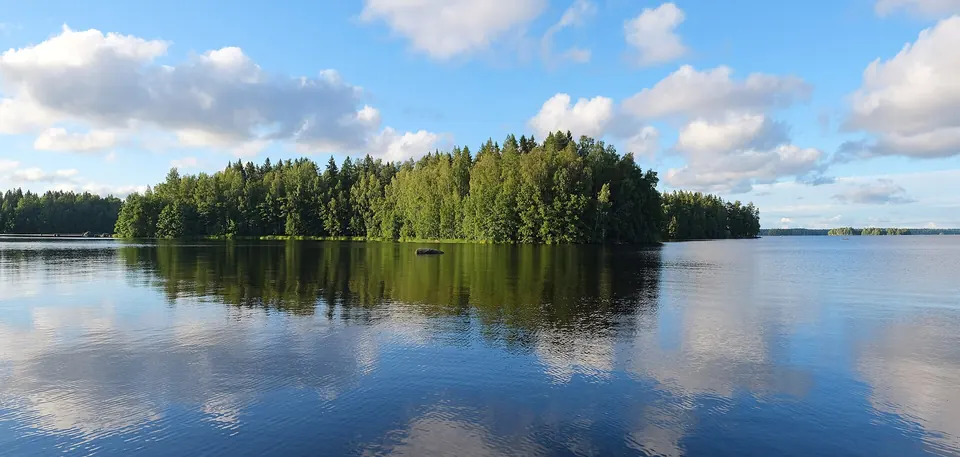
Photo : kallerna · CC BY-SA 4.0 · Wikimedia Commons
Finland is, above all, a nature destination. The Finland Promotion Board counts roughly 188,000 lakes, and the country has 41 national parks, all managed by Metsähallitus (Parks & Wildlife Finland), according to its official website. Marked trails, wilderness huts and campfire sites are everywhere, so hiking, canoeing and cross-country skiing are easy even for beginners.
Finland's "everyman's right" (jokamiehenoikeus) lets you walk, pick berries and mushrooms, and camp briefly in nature, provided you respect the rules and private property. Add a design-minded seaside capital, Helsinki, a sauna culture woven into daily life, and Sámi culture in the far north.
Finland offers two very different trips:
Fall foliage (ruska) and snowy spring are good shoulder options. For a month-by-month breakdown, see our guide to the best time to visit Finland.
Distances are long, so budget at least one overnight train or a domestic flight to reach Lapland.
Helsinki Airport is the main gateway. Finnair flies nonstop to Helsinki from several US cities, including New York (JFK) and Chicago; check Finnair's current timetable, as routes vary by season. Many travelers also connect through other European hubs. From the airport, the commuter train reaches downtown Helsinki in about 30 minutes, according to transit operator HSL.
Finland is in the Schengen Area: with a US passport you can stay visa-free for up to 90 days in any 180-day period across all Schengen countries. The EU's Entry/Exit System (EES) is being rolled out at borders, so expect to register fingerprints and a photo. ETIAS, the future travel authorization, is not yet in operation and no start date has been confirmed; check the official ETIAS page before you travel and ignore sites selling applications.
Finland uses the euro, and prices are high for lodging, dining and especially guided activities in Lapland (husky and snowmobile safaris), which should be booked early for the Christmas period. A few benchmarks and tips:
| Region | Best for | Highlights |
|---|---|---|
| Helsinki and the south coast | First trip, city break | Design, museums, saunas, Suomenlinna, day trips to Porvoo |
| Turku and the archipelago | Summer, biking, boating | Former capital, islands, Archipelago Trail, Åland |
| Lakeland (Saimaa, Tampere, Savonlinna) | Summer nature, cabins | Canoeing, lake cruises, Olavinlinna Castle |
| Lapland (Rovaniemi, Levi, Saariselkä, Inari) | Winter, aurora, hiking | Snow, polar night, midnight sun, Sámi culture |
Rovaniemi is the best-connected base; Inari and Saariselkä, farther north, offer darker skies and better aurora odds. In summer, a lakeside cabin remains the quintessential Finnish experience.
Pack for the season: in winter, a proper layering system, insulated boots, gloves and a hat; in summer, insect repellent for wetlands and Lapland. For official regional information and inspiration, Visit Finland is the go-to resource.