 Porto
How Many Days in Porto? 1, 2, 3 or 5 Days Planned
2 days for the highlights, 3 to enjoy it, 4–5 with the Douro or Braga by train.

Portugal
Steep lanes tumbling down to the Douro River, tile-covered churches and port wine lodges lined up across the water: Porto rewards travelers who explore on foot. Here is the big picture on when to go, how long to stay, where to base yourself and how to get around.
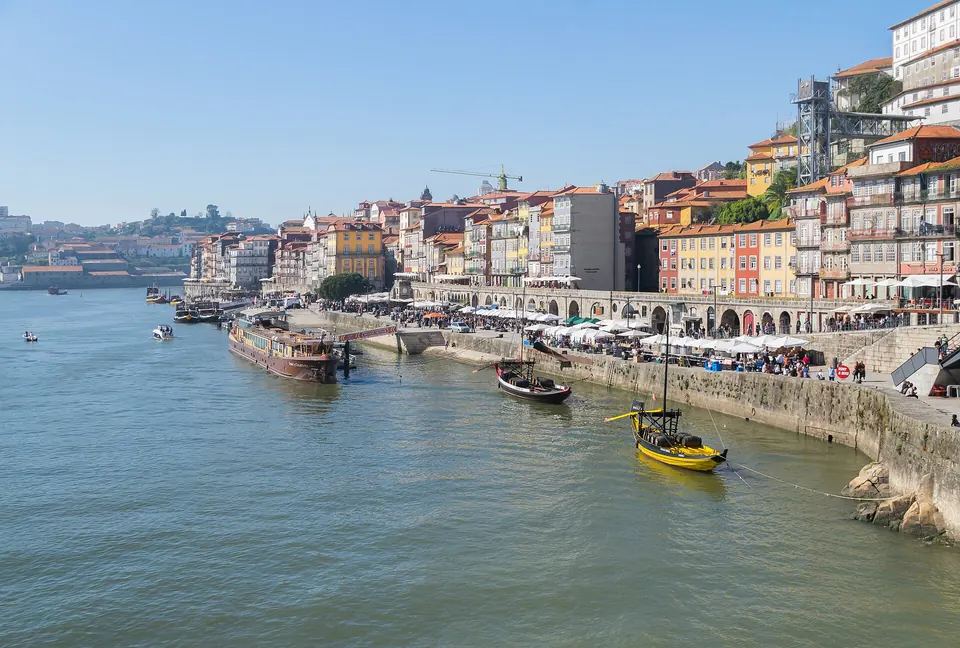
Photo : Taken by User:Olegivvit. Edited by Diliff. Brightened shadows with Shadow/Highlights tool in PS CS2 · CC BY 2.5 · Wikimedia Commons
Portugal's second city climbs the north bank of the Douro, facing Vila Nova de Gaia across the river. Its historic center has been a UNESCO World Heritage Site since 1996, a listing that also covers the Dom Luís I Bridge and the Monastery of Serra do Pilar. According to UNESCO, the bridge's 172-meter (564-foot) iron arch was the longest of its kind in the world when it was built. For the wider country picture, see our Portugal travel guide.
Porto packs a lot into a compact area:
Porto has an Atlantic climate: mild rather than scorching summers and rainy winters. Data from IPMA, Portugal's weather institute, puts average highs around 77–79°F (25–26°C) in August and 57°F (14°C) in January, with November and December the wettest months.
Two days cover the historic center and the Gaia wine lodges. Three let you add Serralves, Casa da Música and Foz. With five, you can spend a day in the Douro Valley and another in Braga or Guimarães, both reachable by regional train. Our guide on how many days to spend in Porto, with 1-, 2-, 3- and 5-day itineraries, breaks each option down day by day.
Francisco Sá Carneiro Airport (OPO) has had nonstop service from the New York area and Boston, but several of these routes are seasonal, so check current schedules; otherwise, connect via Lisbon or another European hub. Metro Line E (purple) runs from the airport to Trindade station downtown in roughly half an hour. From Lisbon, CP's Alfa Pendular train reaches Porto-Campanhã in just under three hours.
Portugal is in the Schengen Area: US passport holders can stay up to 90 days in any 180-day period without a visa. The EU's Entry/Exit System now registers non-EU travelers at the border. ETIAS, the upcoming travel authorization, is not yet in operation and has no confirmed launch date; check the official ETIAS website before you go and avoid unofficial sites charging fees.
Downtown is walkable if you are ready for hills: the upper town and Ribeira are linked by very steep streets. The metro, STCP buses and suburban trains all use the rechargeable Andante card, priced by zone. The Guindais funicular and the Gaia cable car ease the climbs, and the vintage trams, especially Line 1 along the river to Foz, double as a sightseeing ride. You don't need a car in the city itself.
Porto is generally more affordable than Western Europe's big capitals, though lodging prices jump in summer and during major events.
| Area | Best for | Keep in mind |
|---|---|---|
| Ribeira / Sé | First-timers, river views | Very central but busy and hilly |
| Baixa / Aliados | Walking everywhere, metro access | Good mix of buzz and convenience |
| Cedofeita / Bombarda | Local feel, galleries, restaurants | Quieter, close to downtown |
| Boavista | Business hotels, Casa da Música | Well served by metro |
| Foz do Douro | Seafront, a slower pace | Outlying: plan on bus or tram |
| Vila Nova de Gaia | Port lodges, views of Ribeira | Across the river via the Dom Luís I Bridge |
On a first trip, Baixa and Ribeira are the most practical bases. The detailed guides below go deeper into each part of your stay.