Destinations
Visiting the Netherlands: Your Complete Holiday Planning Guide
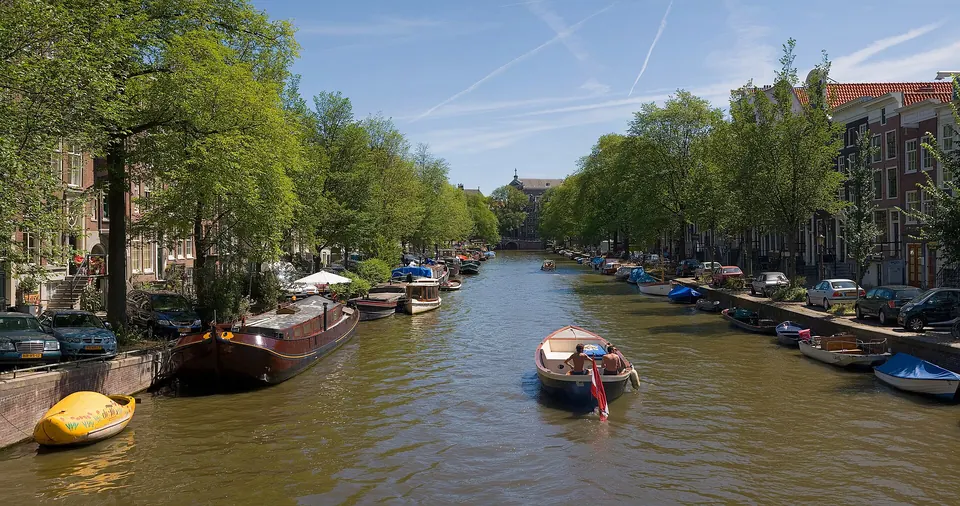
Amsterdam's canals, spring bulb fields and a chain of historic cities only a short train ride apart make the Netherlands one of Europe's easiest countries to explore without a car. Here's what you need to choose your season, trip length, route and base.
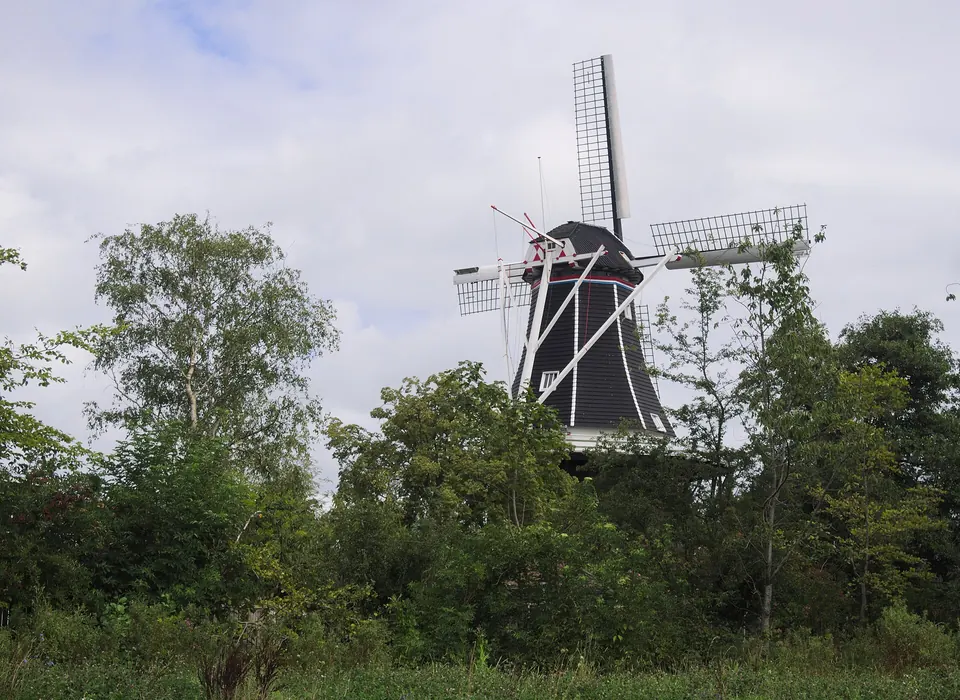
Photo : C messier · CC BY-SA 4.0 · Wikimedia Commons
Where to go in Netherlands
Why visit the Netherlands
The Netherlands fits an unusual concentration of major museums, historic towns and water-shaped landscapes into a compact country. Frequent trains and an extensive cycle-path network let you move between cities without hiring a car, and from the UK it's close enough for a long weekend or an easy week away.
The country breaks down into a few broad areas:
- Amsterdam, the capital, with its canals, big museums and very different neighbourhoods; our complete Amsterdam travel guide covers it in depth.
- The Randstad, the urban crescent in the west: Haarlem, Leiden, The Hague, Delft, Rotterdam and Utrecht, each with its own character (striking modern architecture in Rotterdam, institutions and a beach in The Hague, two-level canals in Utrecht).
- The bulb region between Haarlem and Leiden, home to Keukenhof gardens in spring.
- The north and the Wadden Islands (notably Texel) for beaches, nature and cycling.
- The south and east: hilly Maastricht and Limburg, or Hoge Veluwe National Park in Gelderland.
When to go
The climate is maritime and changeable all year, much like southern England. Long-term averages from the Dutch meteorological institute (KNMI) at De Bilt put the mean temperature at around 18°C in July and 3°C in January. Pack a waterproof whatever the season.
- Spring (March–May): flower season. In 2027, Keukenhof is open from 18 March to 9 May, according to the official Keukenhof website. King's Day (Koningsdag) on Tuesday 27 April 2027 turns towns, especially Amsterdam, into a vast street party; book accommodation early.
- Summer (June–August): long evenings, terraces and North Sea beaches, but also the busiest period.
- Autumn: fewer visitors and low light on the canals; ideal for museums.
- Winter: short days but quiet cities, with Christmas markets and light festivals in December.
How long to stay
- 3–4 days: Amsterdam plus one day trip (Haarlem, Zaanse Schans or, in spring, Keukenhof).
- A week: Amsterdam followed by two or three Randstad cities (Utrecht, The Hague and Delft, Rotterdam), all easy to link by train.
- 10–14 days: add the north (Friesland, the Wadden Islands) or the south (Maastricht), or plan a cycling holiday.
Getting there and getting around
By train, plane or ferry
Eurostar runs direct trains from London St Pancras to Amsterdam via Rotterdam in roughly four hours, with further connections via Brussels. Flights from UK airports land at Amsterdam Schiphol, from where a direct train reaches Amsterdam Centraal in about 15 minutes. Ferries across the North Sea are another option if you want to bring your car or bike.
Entry rules after Brexit
British citizens can visit the Schengen Area, including the Netherlands, for up to 90 days in any 180-day period without a visa. Passport validity rules and border checks have changed since Brexit, and the EU's ETIAS travel authorisation is not yet in operation, so check the latest GOV.UK travel advice for the Netherlands before you travel.
Getting around
NS trains are the easiest way between cities, and most major Randstad cities are under an hour from Amsterdam. There's no need for a local travel card: with OVpay you tap in and out with a contactless bank card or your phone, provided you use the same card or device at both ends. In town, trams, buses and bikes take over. A car is of little use in city centres, where parking is scarce and expensive.
Budget essentials
The Netherlands is a fairly expensive destination, particularly for accommodation in Amsterdam. Two recent changes push prices up:
- VAT on accommodation rose from 9% to 21% on 1 January 2026.
- Amsterdam's tourist tax is 12.5% of the room rate (excluding VAT) in 2026, and the city council has approved a rise to 16% for 2027. Each municipality sets its own rate.
To keep costs down, stay in another Randstad city and commute by train, travel out of season and rely on bikes and public transport. Card payment is the norm and some businesses refuse cash, so take a card without foreign transaction fees.
Where to stay: main areas
| Area | Best for |
|---|---|
| Amsterdam | First visits, museums, nightlife; the priciest option |
| Haarlem, Leiden | Calmer base near Amsterdam and the bulb fields |
| Utrecht | Central rail hub, lively student atmosphere |
| The Hague, Delft, Rotterdam | Architecture, museums, Scheveningen beach; Rotterdam is a Eurostar stop |
| Maastricht, Wadden Islands | A dedicated stay away from the classic route |
For a first trip, Amsterdam is the most practical base; read our Amsterdam guide to pick the right neighbourhood.