Visiting Bavaria: What to See, How Many Days, Getting Around and Costs
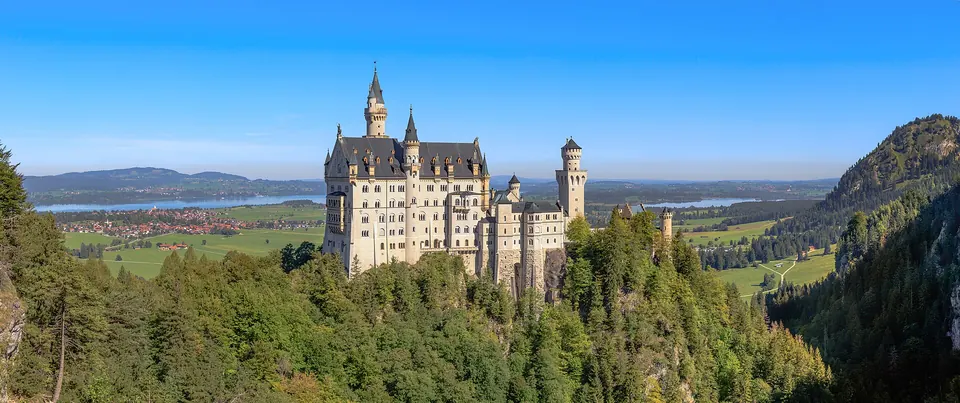
Photo : Llez · CC BY-SA 3.0 · Wikimedia Commons
To visit Bavaria, combine four areas: Munich, the castles of King Ludwig II (including Neuschwanstein, a UNESCO site since 2025), the Alps (Zugspitze, Königssee) and the Franconian towns (Nuremberg, Bamberg, Würzburg, Rothenburg). One week covers the essentials. Regional trains and the Bayern-Ticket are enough for most stops, as long as you book Neuschwanstein ahead.
Bavaria is Germany's largest state, and its best-known sights are far apart: the castles and the Alps in the south, the historic towns in the north. Before you book, it helps to know what to group together, where to sleep and which transport ticket to buy. For an overview of the region, its cities and its food, see also our complete Bavaria guide.
Visiting Bavaria: the main areas to know
To plan a holiday in Bavaria, think in areas rather than a list of sights:
- Munich and Upper Bavaria: the capital, its museums and palaces, with Lake Chiemsee (Herrenchiemsee Palace) an easy day trip.
- The Allgäu and the Füssen area: Neuschwanstein and Hohenschwangau at the foot of the Alps. Füssen is also the southern end of the Romantic Road.
- The Bavarian Alps: Garmisch-Partenkirchen and the Zugspitze in the west, Berchtesgaden and the Königssee in the east, Linderhof in between.
- The Danube: Regensburg, whose old town has been a UNESCO site since 2006.
- Franconia, in the north: Nuremberg, Bamberg (old town listed since 1993), Würzburg (Residence listed since 1981) and Rothenburg ob der Tauber.
In one week you have to choose: either the south (Munich, castles, Alps), or a loop that adds Franconia at the cost of busier days.
What to see in Bavaria: the highlights
Munich
Munich is a practical base: most day trips leave from its main station. Allow at least two days for the centre (Marienplatz, Viktualienmarkt, the Residenz), the English Garden and Nymphenburg Palace. The Residenz and Nymphenburg are run by the Bavarian Palace Administration, like Neuschwanstein, so they are covered by the 14-day ticket described below.
Neuschwanstein and King Ludwig II's castles
On 12 July 2025, the World Heritage Committee added "The Palaces of King Ludwig II of Bavaria" to the UNESCO list. The property groups four sites built between 1868 and 1886: Neuschwanstein, Linderhof, Schachen and Herrenchiemsee.
Neuschwanstein can only be visited on a guided tour, on a date and time printed on your ticket. In 2026, admission is €21, about £18 (€20, about £17, reduced) and free for under-18s. Booking online adds a €2.50 fee (about £2) per ticket, even for free children's tickets. The neighbouring castle of Hohenschwangau, where Ludwig II spent his childhood, is run by a different body: expect €23.50 per adult (about £20) and €12 (about £10) for ages 7 to 17.
You cannot drive up to the castles. Park in one of the village's four car parks (P1 to P4), then walk 30 to 40 minutes uphill to Neuschwanstein. You can also take the shuttle bus to the "Jugend" viewpoint, about 15 minutes from the castle, or a horse-drawn carriage (about 20 minutes). In 2026, Neuschwanstein closes at 6 pm from 28 March to 15 October, then at 4 pm from 16 October.
Linderhof, smaller and surrounded by an Italian-style park, combines well with Oberammergau or Garmisch-Partenkirchen. Herrenchiemsee, Ludwig II's replica of Versailles, stands on an island in Lake Chiemsee, east of Munich.
The Bavarian Alps: Zugspitze and Königssee
The Zugspitze (2,962 m) is Germany's highest peak. From the Zugspitzbahn station in Garmisch-Partenkirchen, the cog railway climbs in 75 minutes to the Zugspitzplatt (2,588 m), then the Gletscherbahn cable car reaches the summit in 5 minutes. For a faster route, the cable car from the Eibsee goes straight to the summit in about ten minutes. Winter 2026-27 fares apply from 27 November 2026, and tickets bought online are cheaper than at the desk: check the day's price on the Bayerische Zugspitzbahn fares page.
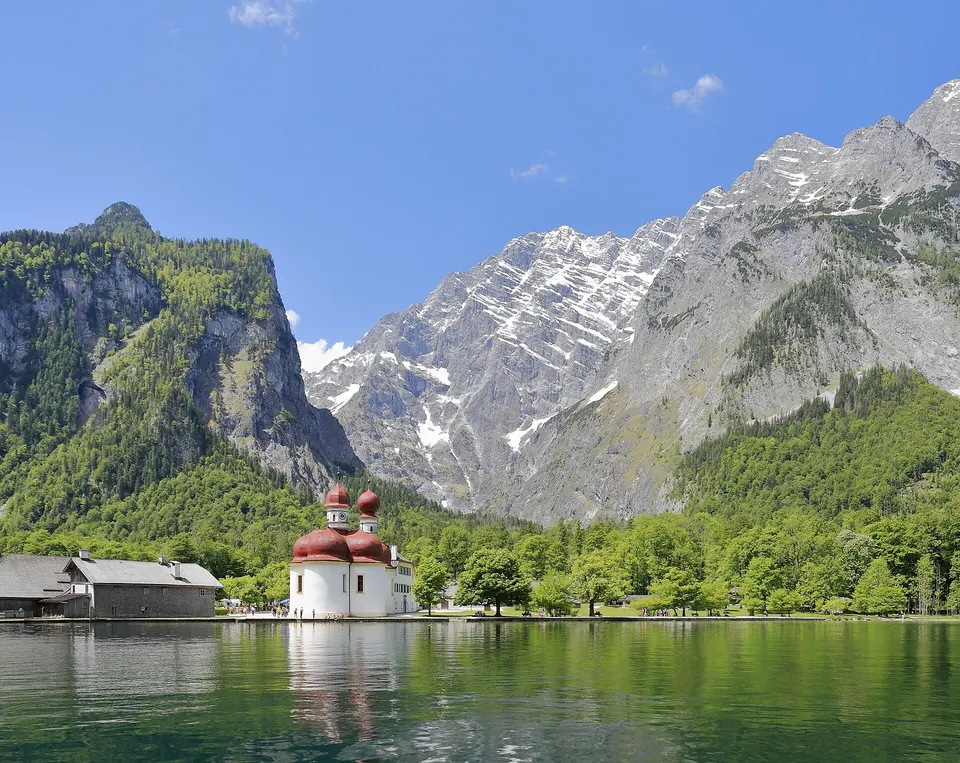
In the south-east, near Berchtesgaden, you explore the Königssee by electric boat to the chapel of St Bartholomew (St. Bartholomä). The crossing from the Seelände landing stage takes about 35 minutes. In 2026, a return trip costs €23.40 (about £20) and a single €11.70 (about £10). Boats run year-round, except when the lake is frozen.
Franconia: Nuremberg, Bamberg, Würzburg and Rothenburg
Nuremberg combines a walled old town dominated by the Imperial Castle with 20th-century memorial sites. Bamberg is listed in full by UNESCO for its old town. In Würzburg, the Residence of the prince-bishops, with its gardens and square, was the first Bavarian site to join the World Heritage list, in 1981.
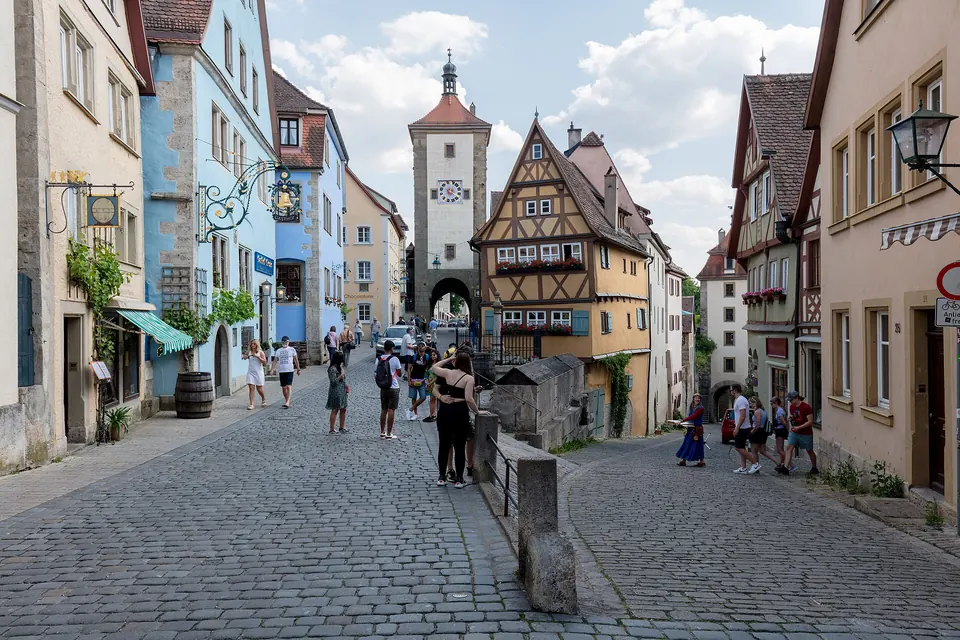
Rothenburg ob der Tauber is the best-known medieval town on the Romantic Road, a route of about 460 km (286 miles) between Würzburg and Füssen that also passes the Wieskirche, a UNESCO-listed church. By train, you reach the town from Steinach (b. Rothenburg) station on a short regional line.
Regensburg
On the Danube, Regensburg's old town and the Stadtamhof district have been UNESCO-listed since 2006. It is a good stop between Munich and Nuremberg.
How many days in Bavaria? A 7-day itinerary
This itinerary gives a first look at the region by public transport. It groups sights by area to limit long journeys.
| Day | Stop | Plan | Night |
|---|---|---|---|
| 1 | Munich | Marienplatz, Viktualienmarkt, Residenz, English Garden | Munich |
| 2 | Munich / Chiemsee | Nymphenburg Palace in the morning, or a trip to Herrenchiemsee | Munich |
| 3 | Füssen | Neuschwanstein and Hohenschwangau (booked time slots), Marienbrücke bridge | Füssen |
| 4 | Garmisch-Partenkirchen | Zugspitze; Linderhof as an alternative | Garmisch |
| 5 | Regensburg | Old town, Danube, Stadtamhof | Regensburg or Nuremberg |
| 6 | Nuremberg and Bamberg | Old town and Nuremberg Castle; afternoon in Bamberg | Nuremberg |
| 7 | Rothenburg and Würzburg | Rothenburg's ramparts; Würzburg Residence | Würzburg |
With ten days, add Berchtesgaden and the Königssee (two days, easier to reach from Munich or Salzburg) and spend one more day in Munich. With four or five days, keep only days 1 to 4.
Getting around Bavaria
The Bayern-Ticket and the Deutschlandticket
The Bayern-Ticket is a day pass valid on all regional trains, city networks (S-Bahn, U-Bahn, tram) and almost all buses in Bavaria, but not on ICE and IC trains. It costs €34 for one person (about £29), plus €10 (about £8.50) for each additional traveller, up to five people. Up to three children aged 6 to 14 travel free. On weekdays it is valid from 9 am until 3 am the next day. On weekends and public holidays it is valid from midnight. It also takes you as far as Salzburg, but the city's local buses are not included. Full conditions are on the DB Regio Bayern tickets page.
The Deutschlandticket costs €63 a month (about £54) since January 2026. It covers all local and regional transport in Germany, but it is sold only as a subscription, cancellable monthly. It makes sense for a long stay with many trips, as long as you remember to cancel it.
Driving
A car gives more freedom in the Alps and on the Romantic Road, especially between Füssen, Linderhof and Garmisch, where public transport needs connections. Remember that Germany drives on the right, unlike the UK. In Munich and Nuremberg a car adds nothing: public transport is enough.
Budget: what the main sights cost
| Item | Adult price | Good to know |
|---|---|---|
| Neuschwanstein | €21, about £18 (+€2.50 online) | Free under 18 (booking fee still due) |
| Hohenschwangau | €23.50, about £20 | €12 (about £10) ages 7 to 17; free under 7 |
| 14-day Bavarian palaces ticket | €40, about £34 (€80, about £68, family or couple) | 40+ sites including Neuschwanstein, but not Hohenschwangau |
| Königssee boat (return to St. Bartholomä) | €23.40, about £20 | Single: €11.70 (about £10) |
| Bayern-Ticket | €34, about £29 + €10/person | Up to 5 people, regional trains only |
| Deutschlandticket | €63/month, about £54 | Subscription only |
| Nuremberg Christmas market | Free | 27 November to 24 December 2026 |
The Bavarian Palace Administration's 14-day ticket pays off once you visit two or three sites, for example Neuschwanstein, Linderhof and the Munich Residenz. Even with this ticket, you must pick up a free entry ticket for a time slot, at the ticket office or online for Neuschwanstein. Check the current price before buying.
Holidays in Bavaria: which season to choose
- Spring and summer: the best period for the Alps, the Zugspitze and the lakes. The castles open later (until 6 pm at Neuschwanstein in 2026) but are also busier: book several weeks ahead.
- Late September: Oktoberfest 2027 runs from 18 September to 3 October 2027 on the Theresienwiese in Munich, opening at noon on 18 September. Munich accommodation is in high demand on these dates.
- Advent: Nuremberg's Christkindlesmarkt runs from 27 November to 24 December 2026, daily from 10 am to 9 pm (until 2 pm on 24 December), with about 180 stalls on the Hauptmarkt. The official opening is on 27 November at 5.30 pm.
- Winter: ski season on the Zugspitze. The castles close earlier (4 pm at Neuschwanstein) and access can be disrupted by snow.
Entry rules and practical tips for UK travellers
UK passport holders can stay in the Schengen Area, which includes Germany, for up to 90 days in any 180-day period without a visa. Your passport must have been issued less than 10 years before the day you enter and be valid for at least three months after the day you plan to leave. Identity checks can take place on arrival by air, train, bus or car. German authorities confiscate documents that were reported lost or stolen and then used again: if you find a passport you reported lost, do not travel with it. For the EU's new entry and authorisation systems (EES and ETIAS) and any change to the rules, check the official GOV.UK travel advice for Germany before you book.
Frequently asked questions
How many days do you need in Bavaria?
Do you need to book Neuschwanstein in advance?
Can you visit Bavaria without a car?
When is Oktoberfest 2027?
What do UK citizens need to visit Bavaria?
Sources
- Neuschwanstein – Admission fees and tickets (Bayerische Schlösserverwaltung)
- Hohenschwangau – Visitor information
- Hohenschwangau – Official tickets
- Hohenschwangau – Ticketpreise
- Füssen – Schlösserinfo 02/2026 (PDF)
- Bayerische Schlösserverwaltung – Annual season tickets and 14-day tickets
- UNESCO – Les châteaux du roi Louis II de Bavière
- Auswärtiges Amt – Inscription of the castles of King Ludwig II on the UNESCO list
- Bayerisches Staatsministerium – World Heritage Sites in Bavaria
- DB Regio Bayern – Regional day tickets for Bavaria
- bahn.de – FAQ Bayern-Ticket
- muenchen.de – Deutschlandticket 63 Euro seit Januar 2026
- Bayerische Zugspitzbahn – Rundreise Zugspitze
- Bayerische Zugspitzbahn – Tickets & rates
- muenchen.de – Zugspitze
- Bayerische Seenschifffahrt – Fahrpreise Königssee (PDF)
- Bayerische Seenschifffahrt – Fahrplan Winter Königssee (PDF)
- Füssen – The Romantic Road
- muenchen.de – Oktoberfest 2027
- Nürnberg Tourismus – Christkindlesmarkt
- bahnhof.de – Steinach (b Rothenburg o d Tauber)
- Rail Europe – Munich to Füssen train
- France Diplomatie – Allemagne, entrée/séjour
Facts checked against these sources on 23 November 2026.