 Hungary
Visiting Hungary: What to See and How Many Days
Budapest first, then the Danube Bend, Lake Balaton, Eger, Tokaj or Pécs: what to see in Hungary and how to plan your trip.
Destinations
Thermal baths in Budapest, the shores of Lake Balaton, the Tokaj vineyards and baroque Eger: Hungary fits a great deal into a compact country that's easy to explore by train. Here's when to go, how long to stay, what it costs in forints and where to base yourself.
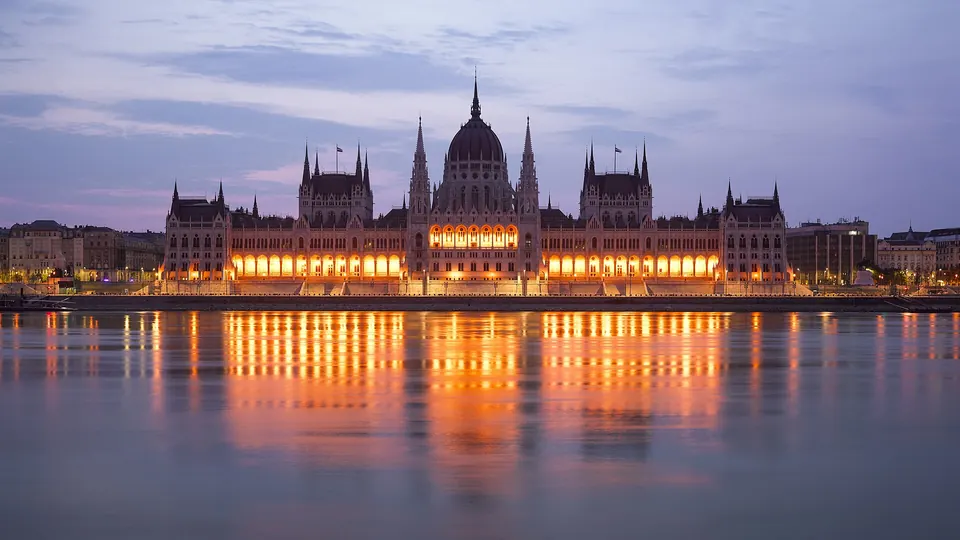
Photo : Mgimelfarb · CC BY-SA 4.0 · Wikimedia Commons
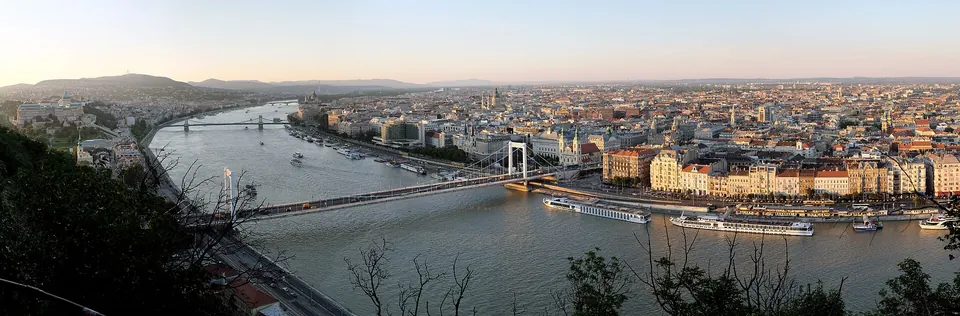
For many British travellers, Hungary means a city break in Budapest. That's a fine start, but only a start. The capital's UNESCO-listed heart covers the Buda Castle Quarter, the Danube embankments and Andrássy Avenue, and it remains a working spa city, with Ottoman-era baths and grand Art Nouveau bathhouses still in daily use.
Beyond Budapest, the national tourism office describes Lake Balaton as the largest lake in Central Europe, with summer swimming and wine country on its northern shore. In the north-east, the Tokaj wine region has been a World Heritage Site since 2002. Eger brings together a hilltop castle, an Ottoman minaret and wine cellars, and Pécs, European Capital of Culture in 2010, has a UNESCO-listed early Christian necropolis. Add the folk village of Hollókő and the puszta of Hortobágy National Park. For a region-by-region overview, read our guide to what to see in Hungary and how to plan your route.
Hungary has a continental climate, with hot summers and cold winters. It's landlocked, so Lake Balaton becomes the summer seaside, and it's at its busiest and most expensive in July and August, which is also the school-holiday crunch.
Allow 3 days for Budapest: Buda, Pest, a thermal bath and an evening on the river. With a week, add a Balaton stay or an Eger–Tokaj wine loop, or day trips to the Danube Bend (Szentendre, Visegrád, Esztergom). Ten days to a fortnight lets you take in Pécs in the south, the Great Plain and Hortobágy in the east, and Sopron by Lake Fertő in the west. Our Hungary itineraries by trip length set out each option.
Budapest Liszt Ferenc International Airport has direct flights from London and several regional UK airports on both low-cost and full-service carriers. Going by rail is possible: take the Eurostar to the Continent and connect across Germany or via Vienna, usually with an overnight stop or a night train. From Vienna, Railjet trains reach Budapest-Keleti in about 2 hours 40 minutes.
Since Brexit, British passport holders can spend up to 90 days in any 180-day period in the Schengen Area without a visa. Your passport must have been issued less than 10 years before you arrive and be valid for at least 3 months after the day you plan to leave. On arrival you'll register fingerprints and a photo in the EU's Entry/Exit System, so allow extra time at the border. Check the latest GOV.UK entry requirements for Hungary before you travel.
Hungary's rail network radiates from Budapest and serves Eger, Balaton, Pécs and Debrecen well. In Budapest, BKK public transport (metro, tram, bus) costs 500 Ft a ticket bought in advance (700 Ft on board) or 5,750 Ft for a 72-hour travelcard. The 100E airport bus needs its own 2,500 Ft ticket. If you're driving, an electronic motorway vignette is compulsory, about 6,900 Ft for 10 days in 2026. Remember that Hungary drives on the right.
The currency is the Hungarian forint (HUF or Ft), not the euro. Cards are widely accepted, and paying in forints usually beats any euro or sterling conversion you're offered. Transport and eating out are generally cheaper than in Western Europe, though Budapest hotel prices in high season have largely caught up with other capitals.
| Item | 2026 guide price |
|---|---|
| Budapest transport ticket | 500 Ft (700 Ft on board) |
| Budapest 72-hour travelcard | 5,750 Ft |
| 100E airport bus | 2,500 Ft |
| Budapest tourist tax | 4% of the room rate |
| 10-day motorway vignette | about 6,900 Ft |
Budapest's 4% tourist tax is often charged at check-in rather than included in prepaid online rates, so build it in when comparing hotels.
For current events and opening times, the official Visit Hungary site is the reference.