 Sicily
10 Days in Sicily: Day-by-Day Itinerary by Car or Train
Palermo, Agrigento, Val di Noto, Syracuse, Etna and Taormina: a 10-day Sicily itinerary with journey times.
Italy
Greek temples, Roman mosaics, Arab-Norman churches, Baroque towns and an active volcano: Sicily fits seven World Heritage Sites onto a single island. Here's the overview on seasons, trip length, airports and where to base yourself, before you turn to our detailed itineraries.
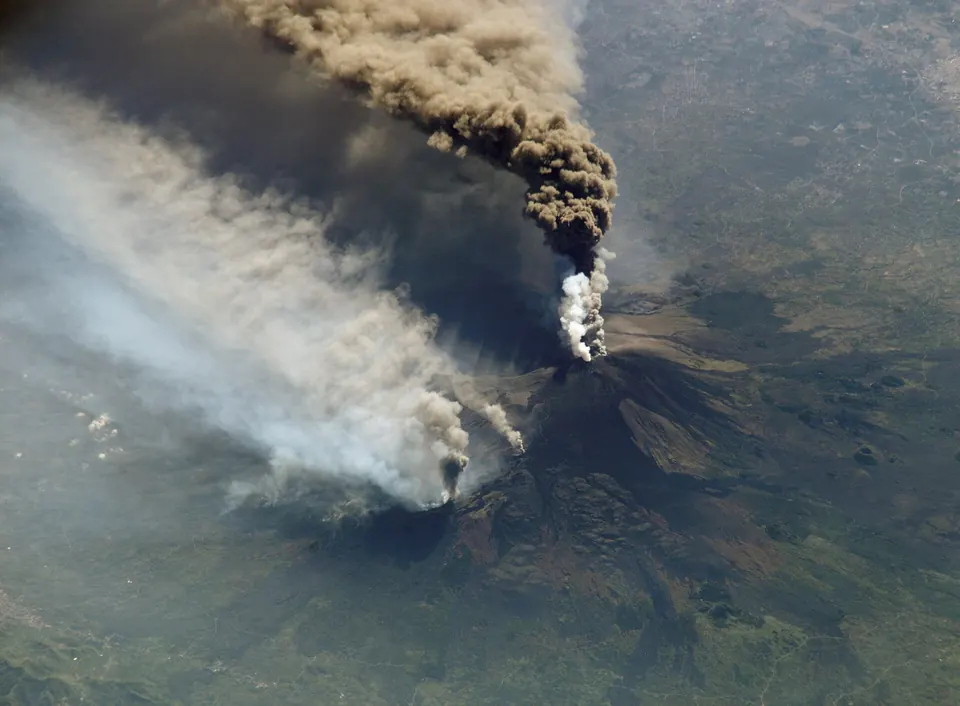
Photo : NASA · Public domain · Wikimedia Commons
SicilyPalermo, Agrigento, Val di Noto, Syracuse, Etna and Taormina: a 10-day Sicily itinerary with journey times.
 Sicily
Palermo, Agrigento, Syracuse, Noto, Etna and Taormina in 7 days: the route, journey times and a car-free option.
The largest island in the Mediterranean, Sicily rarely rewards a whistle-stop tour: the distances, slow inland roads and sheer number of sights favour travellers who choose one side of the island or allow plenty of time. This guide sets out the essentials; day-by-day itineraries and month-by-month weather have their own guides, and the rest of the country is covered in our Italy travel guide.
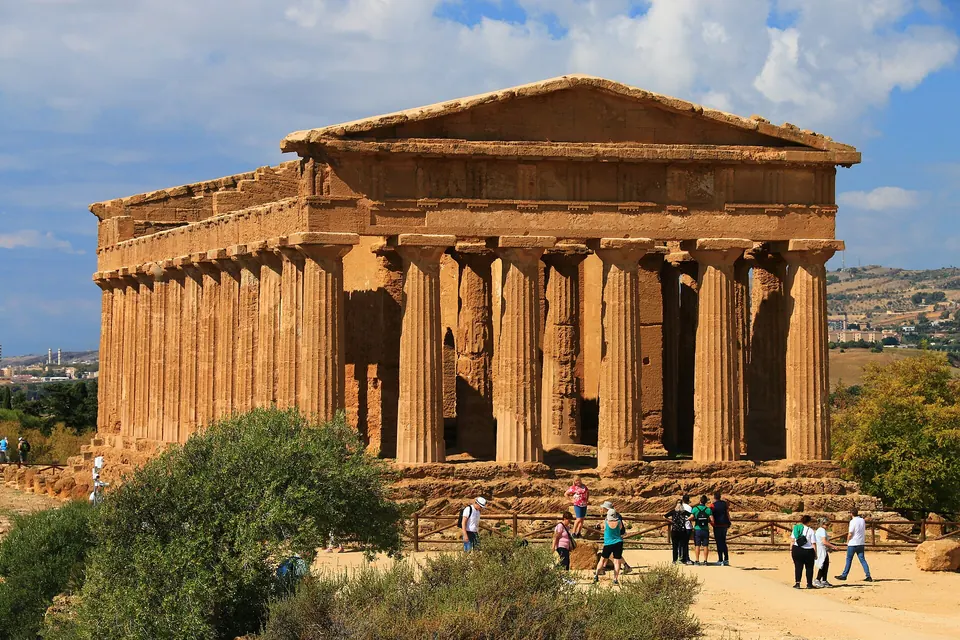
Few places in Europe stack up so many civilisations in such a compact space. The island has seven properties on the UNESCO World Heritage List:
Then there are Palermo's street markets, Taormina's clifftop views, Erice and Segesta in the west, the salt pans between Trapani and Marsala, the Egadi Islands, and a regional cuisine worth planning whole days around.
Spring (April to June) and early autumn (September and October) are the best-balanced periods: bearable heat for walking round sun-baked archaeological sites, pleasant sea conditions in late spring and early autumn, and fewer crowds than in high summer. They also sidestep the busiest UK school holidays.
July and August are hot and crowded, especially on the coast and the islands, with prices at their peak; even so, it is the easiest season for the Aeolian and Egadi Islands. Winter stays mild on the coast and suits city breaks, but ferry and hydrofoil services to the smaller islands are often reduced and Etna can be snow-capped. Temperatures in °C, rainfall and sea temperatures are covered in our guide to Sicily weather by month.
Sicily takes longer to get round than the map suggests: winding minor roads, pedestrianised historic centres and sites that easily fill half a day. Better to see one side properly than to rush the whole island.
According to the regional tourist board, Visit Sicily, the island has four airports: Palermo (west), Catania (east and Etna), Trapani-Birgi (west coast and Egadi Islands) and Comiso (the Baroque south-east). Palermo and Catania have the widest choice of routes, including direct flights from several UK airports, with more in summer. Flying into one and home from the other saves doubling back.
Sicily can also be reached overland: Eurostar to Paris, trains down through Italy, then a night train whose carriages cross the Strait of Messina on a ferry. Drivers take the car ferry from Villa San Giovanni in Calabria, roughly 20 minutes to Messina's Rada San Francesco port, with round-the-clock departures from the main operator. Overnight ferries also link Palermo with mainland ports such as Naples and Genoa.
A hire car is the most flexible option for the interior, the south coast and the Val di Noto; beware the limited-traffic zones (ZTL) in historic centres, which are closed to non-resident drivers. Trains link the main cities (a direct regional service takes about 3 hours between Palermo and Catania) and coaches fill the gaps, notably to Taormina, Agrigento and Syracuse. Ferries and hydrofoils serve the islands from Milazzo, Trapani and Palermo.
| Area | Best for | Nearby |
|---|---|---|
| Palermo | City base for the west and north | Monreale, Cefalù, Segesta |
| Trapani / Marsala | West coast, salt pans, islands | Erice, Egadi Islands, Mozia |
| Agrigento | Stopover on the south coast | Valley of the Temples, Scala dei Turchi |
| Syracuse (Ortigia) | Baroque and ancient south-east | Noto, Modica, Ragusa, Pantalica |
| Catania / Taormina | East coast and the volcano | Mount Etna, Alcantara Gorge |
| Lipari | Base in the Aeolian Islands | Vulcano, Salina, Stromboli |
For a round trip, two or three bases are usually enough: Palermo in the west, Syracuse or Catania in the east, with a night in Agrigento in between.
Prices vary sharply with the season: July, August and Italian public holidays are the dearest, particularly on the islands and in Taormina, where it pays to book early. Allow for car hire, fuel, site and museum tickets, and the tourist tax many towns charge per person per night, paid at your accommodation (in Palermo it is capped at €5 depending on the type of property).
Since Brexit, British visitors can stay in the Schengen area without a visa for up to 90 days in any 180-day period. According to GOV.UK's Italy entry requirements, your passport must have been issued less than 10 years before you arrive and expire at least 3 months after you plan to leave. The EU's Entry/Exit System replaces passport stamping: expect to register fingerprints and a photo on your first visit (at St Pancras this is done before departure). ETIAS was not yet in operation as of November 2026; check GOV.UK before you travel. On Etna, access to the summit craters is governed by rules that change with volcanic activity, so check locally before any excursion.