 Crete
Crete with Kids: Family Holiday Guide and Budget
Shallow lagoons, an aquarium, Knossos free for under-18s and water parks: how to plan a family holiday in Crete.

Greece
Greece's largest island stretches about 260 km from end to end, with Minoan palaces, dramatic gorges, Venetian harbour towns and beaches on three seas. Here's the big picture on seasons, trip length, getting around and where to base yourself, with links to our in-depth guides.
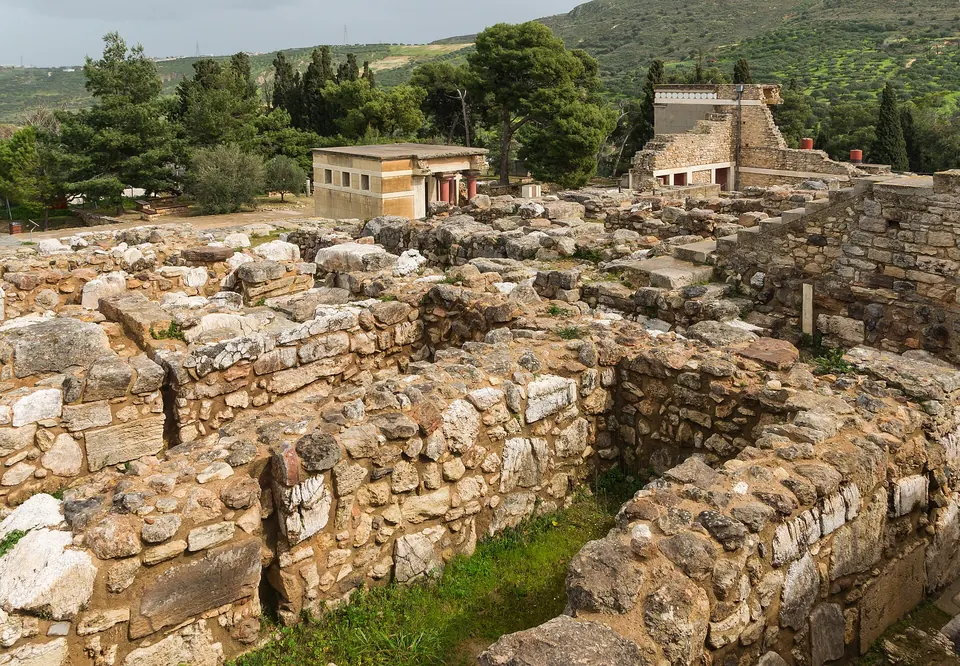
Photo : H. Zell · CC BY-SA 3.0 · Wikimedia Commons
Crete isn't an island you can tick off in a long weekend. At around 8,336 km² and home to roughly 625,000 people (2021 census), it's the largest island in Greece and one of the biggest in the Mediterranean. It runs some 260 km from west to east, with mountains through the middle, a busy north coast and a wilder south coast facing the Libyan Sea. This page gives the overview; to fit Crete into a wider trip, see our Greece travel guide.
Crete suits couples and independent travellers as much as families. If you're bringing children, our guide to Crete with kids: activities, bases and budget covers family-friendly beaches, day trips and where to stay.
The main season runs roughly from April to October. May–June and September–October are the best balance: a warm sea, manageable heat for sites and walks, and fewer crowds than midsummer. July and August are the hottest and busiest months, with peak accommodation prices and crowded sites around midday — and they coincide with UK school holidays.
The Samaria Gorge only opens in the warmer months, generally May to October, and can close at short notice for rain or extreme heat, so check that year's dates before building a trip around it. In winter many beach resorts shut, but Heraklion, Chania and Rethymno stay lively.
Mountain and south-coast roads are slow going: switching bases two or three times beats long return drives from one hotel.
Crete has two main airports: Heraklion (HER) in the north-centre and Chania (CHQ) in the west. In season, many direct flights link them with UK airports; outside summer you'll often need to change in Athens. From Athens' port of Piraeus, ferries sail to Heraklion and to Souda, the port for Chania, usually in 8 to 10 hours depending on the operator, often overnight with cabins.
Since Brexit, British visitors can stay up to 90 days in any 180-day period in the Schengen area without a visa. Your passport must have been issued less than 10 years before you arrive and be valid for at least 3 months after the day you plan to leave. The EU Entry/Exit System now applies at the border, and the ETIAS travel authorisation has not yet launched. Check the latest GOV.UK entry requirements for Greece before you travel.
There are no trains on Crete. Car hire is the most flexible way to reach the south coast, mountain villages and remote beaches; remember Greece drives on the right. KTEL buses link the north-coast towns and main sites well, with fewer services heading south. Boats run along the south coast, including those you'll need to leave Agia Roumeli after walking the Samaria Gorge, as there's no road out.
Crete is generally better value than Santorini or Mykonos, but prices vary sharply by season.
| Cost | What to know |
|---|---|
| Accommodation | Highest in July–August. A climate resilience fee is charged per room, per night, depending on category and season, usually paid at the property. |
| Sights | Knossos: about €20 for a full-price ticket. |
| Transport | Car hire costs more in summer, so book early. KTEL buses are cheap along the north coast. |
| Eating out | Village tavernas are often cheaper than seafront restaurants in the resorts. |
For official information on sites and events, see the Greek National Tourism Organisation. The in-depth guides below cover each type of Crete holiday in detail.