 Switzerland
Best Cities to Visit in Switzerland: 9 Picks by Trip Type
Bern and Lucerne for a first trip, Geneva and Lausanne from France, Basel for museums, Lugano for an Italian feel.
Destinations
Alpine peaks, glacial lakes, lakeside cities and four national languages, all linked by trains that cross the country in a few hours: Switzerland suits a long weekend just as well as a grand tour. Here is what you need to choose your season, trip length, route and base.
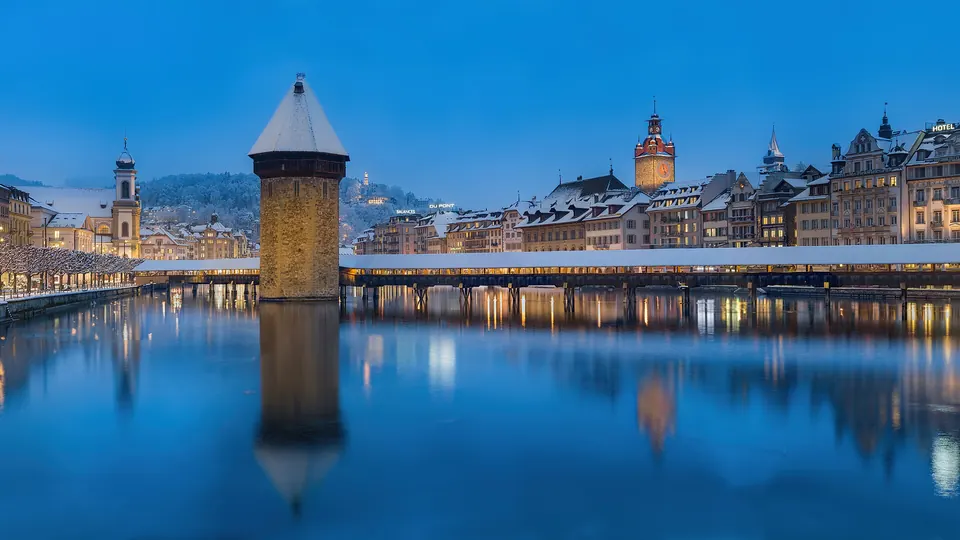
Photo : böhringer friedrich · CC BY-SA 2.5 · Wikimedia Commons
Switzerland squeezes very different landscapes into a small country: glaciers and high Alpine summits, the large lakes of the central plateau, the Jura hills and a Mediterranean-feeling south in Ticino. There are four national languages: German dominates in 19 of the 26 cantons, French in the west, Italian in Ticino and southern Graubünden, while Romansh is spoken by a small minority. Moving between regions often means a change of language, food and architecture, all on the same transport network.
That network is the other great strength. Trains, buses, boats and mountain railways reach almost everywhere, mountain villages included, so a hire car is rarely necessary. Our in-depth guides, shown below this article, cover each city and region in detail.
Between seasons, some cable cars close for maintenance, so check dates before building a trip around a particular summit.
Fewer bases and more nights in each pay off: mountain weather often decides which day is right for going up.
There are flights from UK airports to Zurich, Geneva and the EuroAirport Basel-Mulhouse. By rail, take the Eurostar to Paris, then the TGV Lyria high-speed train to Geneva (about 3 hours 10 minutes) or Zurich (about 4 hours). Driving? A motorway vignette (sticker or e-vignette) is compulsory and costs CHF 40 for the year.
Switzerland is outside the EU but inside the Schengen area. British visitors can stay visa-free for up to 90 days in any 180-day period, with time in other Schengen countries counting towards the total. Your passport must have been issued less than 10 years before you arrive and be valid for at least 3 months after you plan to leave the Schengen area. The Entry/Exit System now records fingerprints and a photo at the border; if you travel via St Pancras, this is done before you leave the UK. Always check the latest GOV.UK travel advice for Switzerland.
Swiss public transport runs to a regular-interval timetable, with train, bus and boat connections planned together. Two passes are worth knowing for visitors living outside Switzerland:
Children under 6 travel free; those aged 6 to 15 travel free with a parent holding the free Swiss Family Card. Seat reservations on scenic trains such as the Glacier Express and Bernina Express are extra. See the official Swiss Travel Pass site for current details.
Switzerland is expensive: accommodation, eating out and especially cable cars to the famous summits soon add up. Transport is easier to keep under control with a pass. 2026 adult standard-class (2nd class) Swiss Travel Pass prices:
| Duration | Price |
|---|---|
| 3 days | CHF 254 |
| 4 days | CHF 309 |
| 6 days | CHF 399 |
| 8 days | CHF 439 |
| 15 days | CHF 499 |
To save money: picnic with supermarket food, use the museums included in the pass, choose the summits the pass covers free over the most famous ones, and avoid peak holiday weeks. The currency is the Swiss franc (CHF), not the euro; cards are widely accepted, but check your bank's foreign transaction fees.
For regional inspiration and practical information, the national tourist board, MySwitzerland, is the reference. Then explore our detailed city and region guides below.