 Amsterdam
How Many Days in Amsterdam? 2, 3 or 5 Days Explained
Three days for a first visit, two if you choose carefully, four or five with day trips from Amsterdam.
Netherlands
Seventeenth-century canals, world-class museums and neighbourhoods you can cover on foot or by bike: Amsterdam packs a great deal into a small space. This guide covers the essentials, from the best season and how long to stay to where to base yourself and why hotel bills have risen.
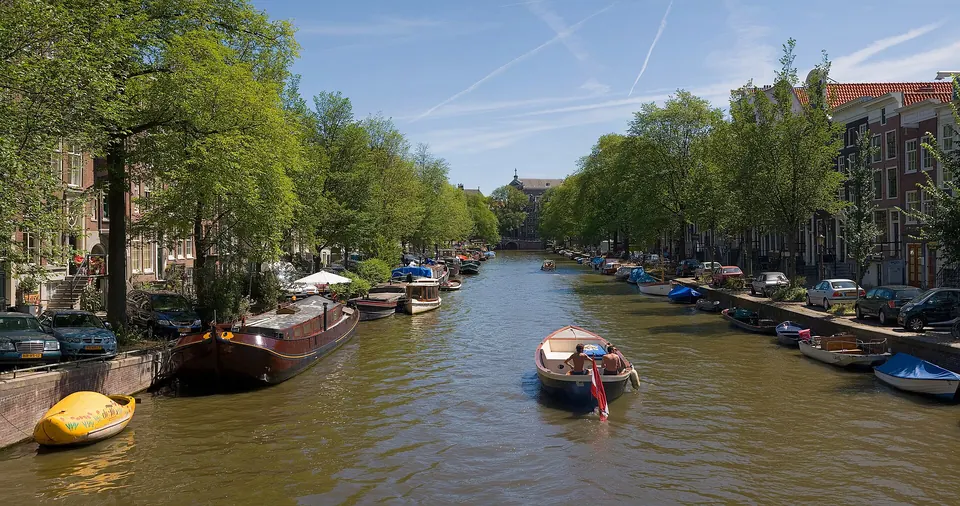
Photo : Diliff · CC BY 2.5 · Wikimedia Commons
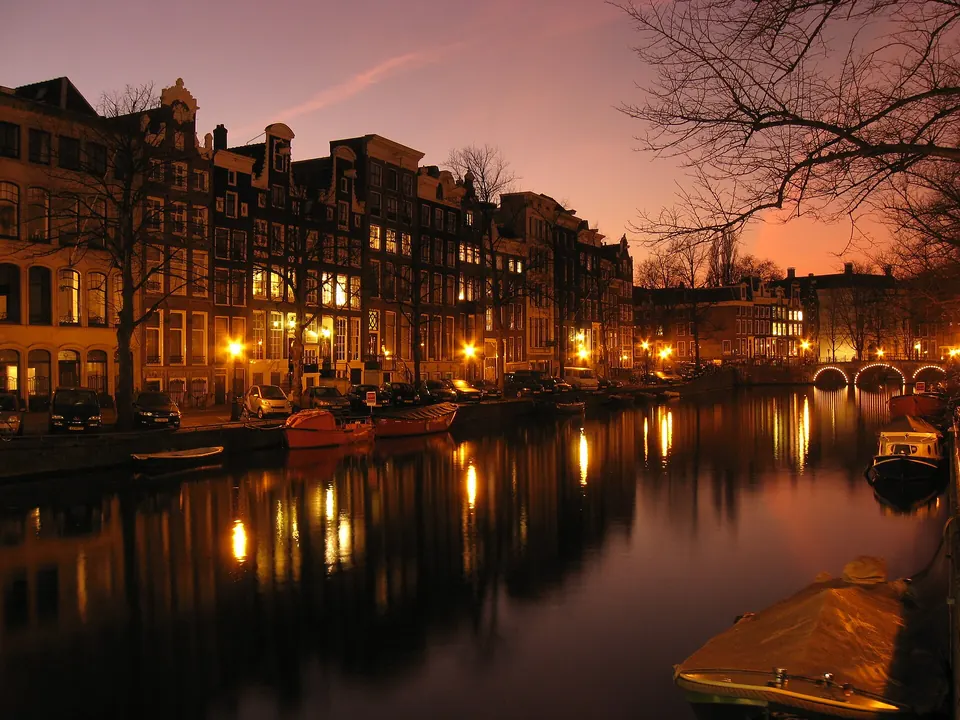
Amsterdam is a compact capital where most sights are within walking distance. Its historic centre is shaped by the 17th-century Canal Ring (Grachtengordel), a UNESCO World Heritage Site: narrow merchants' houses, bridge after bridge and canalside streets shared by pedestrians and a constant flow of cyclists.
It is also one of Europe's great museum cities. Around Museumplein stand the Rijksmuseum, devoted to Dutch art and history, the Van Gogh Museum and the Stedelijk for modern art. In the centre, the Anne Frank House is among the most sought-after visits; tickets are sold online and often go well in advance.
Beyond the postcard views, the city reveals itself neighbourhood by neighbourhood: the lanes of the Jordaan, the market streets of De Pijp, the parks of Oost, and Amsterdam-Noord across the IJ, where former shipyards have become cultural venues.
Amsterdam works all year, but each season has its own character:
Whatever the month, pack a waterproof: showers can arrive at any time of year.
A long weekend is enough for a first visit: the canals, one or two major museums and a wander through the Jordaan. Three days lets you add a less central neighbourhood and a bike ride; with five days you can head out to the villages north of the city or to Haarlem. For day-by-day plans, read our guide on how many days to spend in Amsterdam (2, 3 or 5).
Eurostar runs direct trains from London St Pancras to Amsterdam Centraal in roughly four hours, arriving right in the city centre. Flights from UK airports land at Schiphol, from where trains reach Amsterdam Centraal in about 15 minutes; check current fares with Dutch Railways (NS).
Entry rules: since Brexit, British visitors can stay in the Schengen Area visa-free for up to 90 days in any 180-day period, and passports must meet validity rules on issue and expiry dates. The EU's Entry/Exit System now records biometrics at the border, which can lengthen checks, including at St Pancras. ETIAS is not yet in operation. Check the latest GOV.UK entry requirements for the Netherlands before you travel.
The centre is best explored on foot. For longer journeys, the GVB network runs trams, buses, ferries and a metro with four lines radiating from Centraal. Ferries to Noord are free for pedestrians and cyclists. The simplest way to pay is to tap a contactless card or phone (the OVpay system) when you board and again when you get off: on GVB lines, fares are capped at €10.50 per day, according to I amsterdam, the official tourism site. GVB also sells 1- to 7-day tickets, and the I amsterdam City Card combines transport with museum entry.
If you hire a bike, keep to the cycle lanes and expect busy, fast-moving bike traffic in the centre.
Accommodation is the main cost, and taxes have pushed it up:
Check whether quoted prices include taxes. To save money, travel out of season, stay just beyond the historic centre (public transport makes those areas easy to reach) and compare the City Card with individual tickets depending on how many museums you plan to visit.
| Area | Best for |
|---|---|
| Centre and Canal Ring | First-timers who want everything walkable; priciest and busiest |
| Jordaan | Neighbourhood feel, cafés and independent shops, close to the centre |
| De Pijp | Market, restaurants, lively local scene |
| Oud-Zuid / Museumplein | Next to the big museums, quieter streets |
| Oost | Parks, residential atmosphere, good tram links |
| Noord | Converted cultural spaces, free ferry to Centraal |
To fit Amsterdam into a longer trip, see our Netherlands travel guide.