 Tuscany
Best Villages in Tuscany Map: 6 Areas, 30 Borghi
Tuscany's villages sorted into six areas: the 30 certified borghi, the big classics and how to get around.
Italy
Florence's galleries, Siena's shell-shaped piazza, the vineyards of Chianti, the cypress-lined hills of Val d'Orcia, hilltop towns and an underrated coastline: Tuscany suits a city break as well as a touring holiday. This guide helps you choose the season, length of stay, transport and base before you dig into our detailed guides.
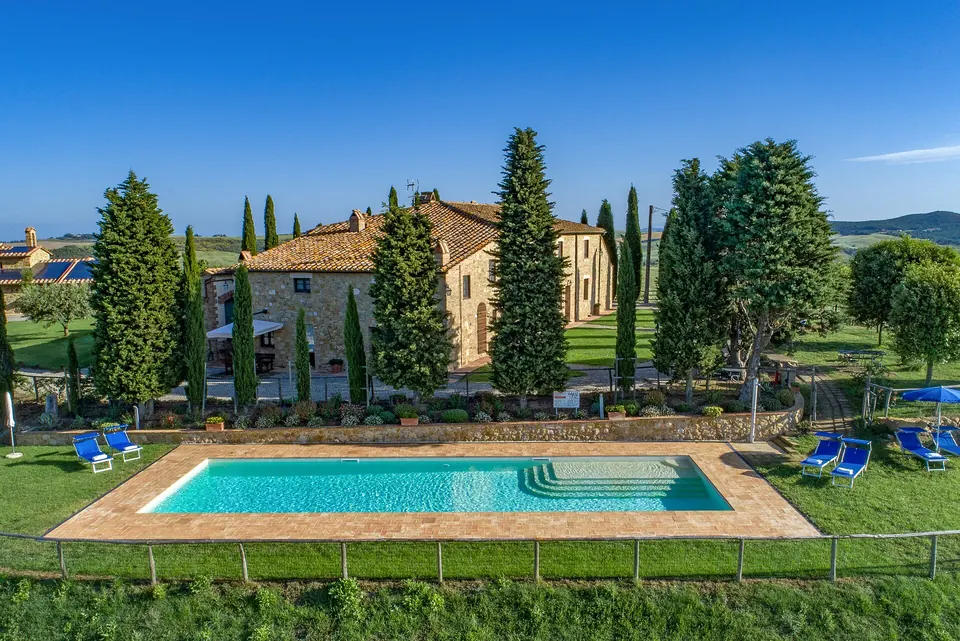
Photo : Agriturismo Bonello · CC BY-SA 4.0 · Wikimedia Commons
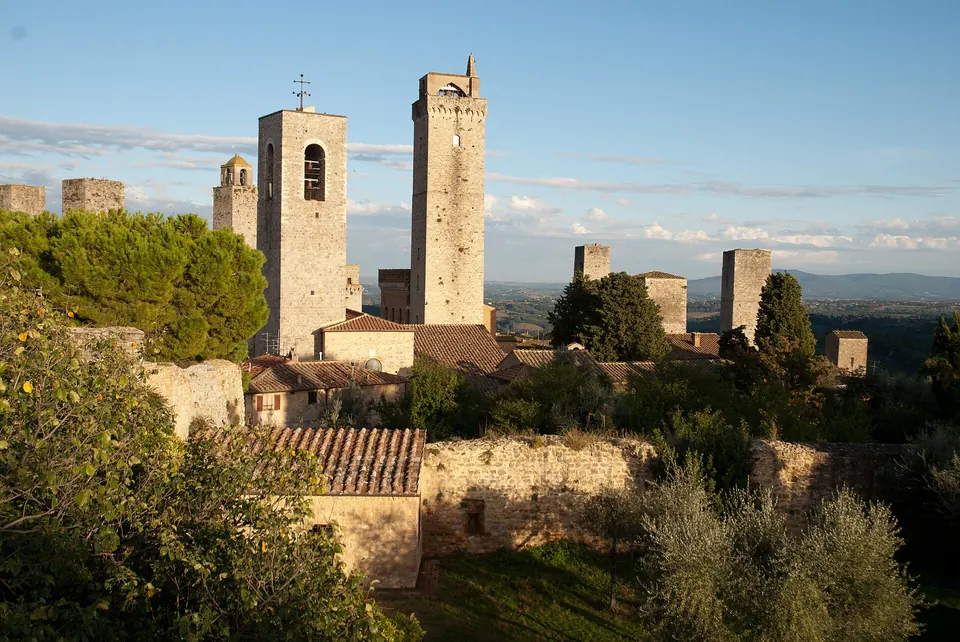
Tuscany fits three kinds of Italy holiday into one compact region. First, the art cities: Florence, cradle of the Renaissance; medieval Siena; Pisa and its Square of Miracles; walled Lucca. Second, the countryside: Chianti's vineyards between Florence and Siena, the bare clay hills of the Crete Senesi, and the farmhouses and cypresses of Val d'Orcia, a UNESCO World Heritage Site. Third, the hilltop towns, from San Gimignano to Montepulciano, Pienza and Volterra. To work out which ones suit your route, see our map of the best villages in Tuscany, grouped by area.
The coast is often overlooked: Versilia's resorts in the north, the wilder Maremma in the south, and the island of Elba off Piombino. It's an easy way to add a few days by the sea to a culture-heavy itinerary.
3 to 4 days covers Florence plus one day trip (Siena, Pisa or Lucca). With a week, add Siena, Chianti and Val d'Orcia, changing base once. With 10 to 14 days, you can combine art cities, countryside, hilltop towns and a few days on the coast or Elba. Two or three well-chosen bases beat moving hotel every night.
Tuscany has two airports: Pisa (Galileo Galilei), served from a number of UK airports, and Florence (Peretola), linked to the city centre by tram. Rome and Milan are alternatives: Frecciarossa and Italo high-speed trains reach Florence Santa Maria Novella in about 1.5 hours from Rome and under 2 hours from Milan. Going overland is possible with Eurostar to Paris and onward connections, but plan on a long day or an overnight stop and check current routes.
Post-Brexit entry rules: British visitors can stay visa-free in the Schengen area for up to 90 days in any 180-day period. Your passport must have been issued less than 10 years before you arrive and be valid for at least 3 months after you leave. Under the EU Entry/Exit System you may need to give fingerprints and a photo at the border. Check GOV.UK's Italy entry requirements before travelling, including the latest on ETIAS, which is not yet in operation.
Trains work well between cities: Florence to Pisa takes about an hour on a Regionale Veloce, and Lucca is on a direct line from Florence. For Siena, the express coach from Florence is often more convenient than the train. Small villages are poorly served, especially on Sundays and bank holidays.
For Chianti, Val d'Orcia or the Maremma, a hire car gives you the most freedom. Remember that Italy drives on the right, and watch out for ZTLs (limited traffic zones): they cover the historic centres of Florence, Siena, Lucca and many hilltop towns, hire cars generally don't have permits, and offences are recorded by camera. Park outside the walls. Speed limits are 50 km/h in towns (sometimes 30), 70 km/h on secondary roads, 110 km/h on dual carriageways and 130 km/h on motorways, according to Visit Tuscany's official driving guide.
Tuscany isn't cheap in high season, particularly Florence. A few verified benchmarks:
To keep costs down, stay at an agriturismo (farm stay) or in a mid-sized town such as Lucca, Arezzo or Siena rather than central Florence, and travel in April–May or October.
| Area | Best for | Highlights |
|---|---|---|
| Florence | First visit, no car | Galleries, main station for day trips by rail |
| Siena and Chianti | Wine and landscape lovers | Central between Florence, San Gimignano and the south |
| Val d'Orcia (Pienza, Montepulciano, Montalcino) | Touring by car, couples | Iconic scenery, hilltop towns close together |
| Lucca and Pisa | Flying into Pisa, smaller budgets | Walkable towns, quick access to Versilia |
| Coast and Maremma | Families, beach holidays | Beaches, nature parks, Elba |
A classic week: three nights in Florence, then four nights at a farm stay between Chianti and Val d'Orcia. Our detailed guides below cover each area and town in depth.