How to Get to Rome from Paris: Plane, Train, Car or Bus?
Photo : Kevin.B · CC BY-SA 4.0 · Wikimedia Commons
The fastest way to get to Rome from Paris is to fly: about 2 hours nonstop to Fiumicino, then a 32-minute train to Roma Termini. The train needs no flight but takes a full day, around 10 hours with one change in Milan. Driving (about 880 miles / 1,420 km, through the Mont Blanc tunnel) and the bus (about 20 hours) make sense mainly for a road trip or a tight budget.
There is no single best way to get to Rome: it depends on where you start, how much time you have and what you plan to do once you are there. This guide compares the four options from Paris (the usual gateway for travelers coming from the US who continue overland), then explains how to get into the city. Once the journey is sorted, you can plan your stay with our complete guide to Rome.
What is the fastest way to get to Rome from Paris?
The table below sums up travel times and starting prices gathered from operators and route planners. Flight times do not include getting to the airport or security checks.
| Mode | Paris–Rome time | Indicative price | Best for |
|---|---|---|---|
| Direct flight | About 2 hours in the air (1 h 55 to 2 h 10 depending on the flight) | Varies a lot by date and airline | Short stays, weekends |
| Train (change in Milan) | About 10 h 10 | From €35 (about $39) Paris–Milan + from €29.90 (about $33) Milan–Rome | Travelers avoiding flights, stops in northern Italy |
| Car | 880–891 miles (1,420–1,434 km), 12 to 14 hours of driving without traffic | Tolls of €56.40 to €111 (about $62 to $122) and fuel of about €165 (about $182), according to Mappy | Road trips, families, stays in central Italy |
| Bus | About 20 h 20 | Varies, check the operator's website | Tight budgets, travelers in no hurry |
Door to door, flying still wins from Paris: even counting the trip to the airport, the wait and the transfer into central Rome, it takes about half a day. The train takes a full day, but it leaves from central Paris and arrives in central Rome, with no security checks and no airport transfer.
Getting to Rome by plane: airports and airlines
A direct Paris–Rome flight takes about 2 hours. Rome has two airports:
- Fiumicino (FCO, Leonardo da Vinci), the main one. It is served from Paris-Charles de Gaulle (Air France, ITA Airways) and from Orly (including Transavia, easyJet and Vueling).
- Ciampino (CIA), smaller and used mostly by low-cost airlines. From the Paris area, Ryanair flies there from Beauvais, not from Roissy or Orly.
Check the arrival airport before you book, because the transfer into the center is different. From Fiumicino, a direct train reaches the main station. From Ciampino, you need to combine a bus and a train or take a shuttle.
Coming from the US, most travelers land at Fiumicino, either on a flight with a connection in Europe or on a nonstop where one exists from their home airport: check airlines for current routes.
From Fiumicino to central Rome
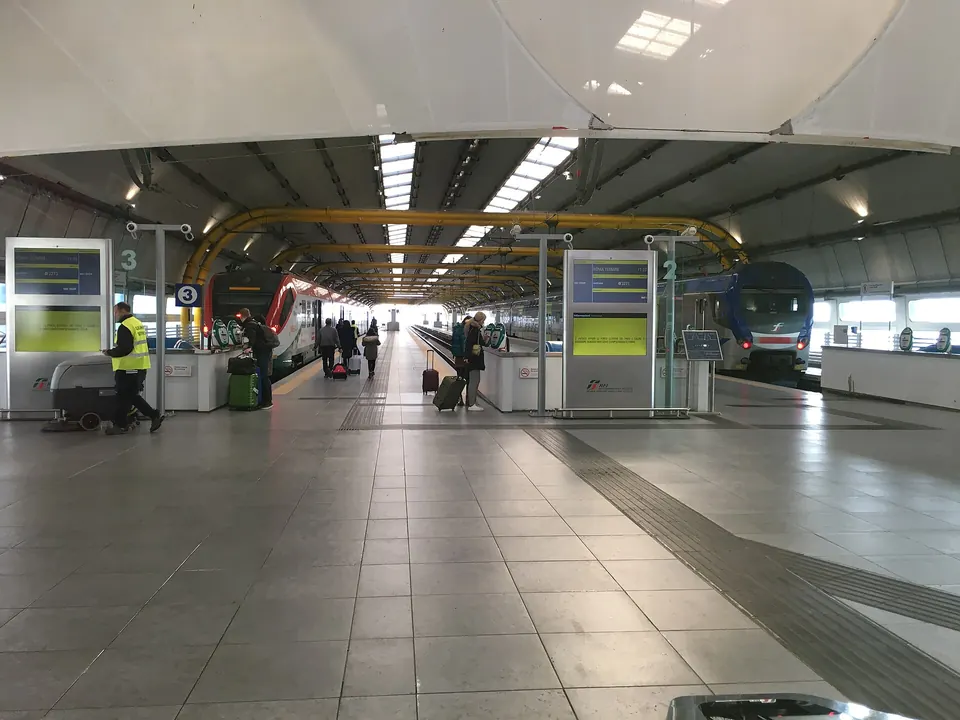
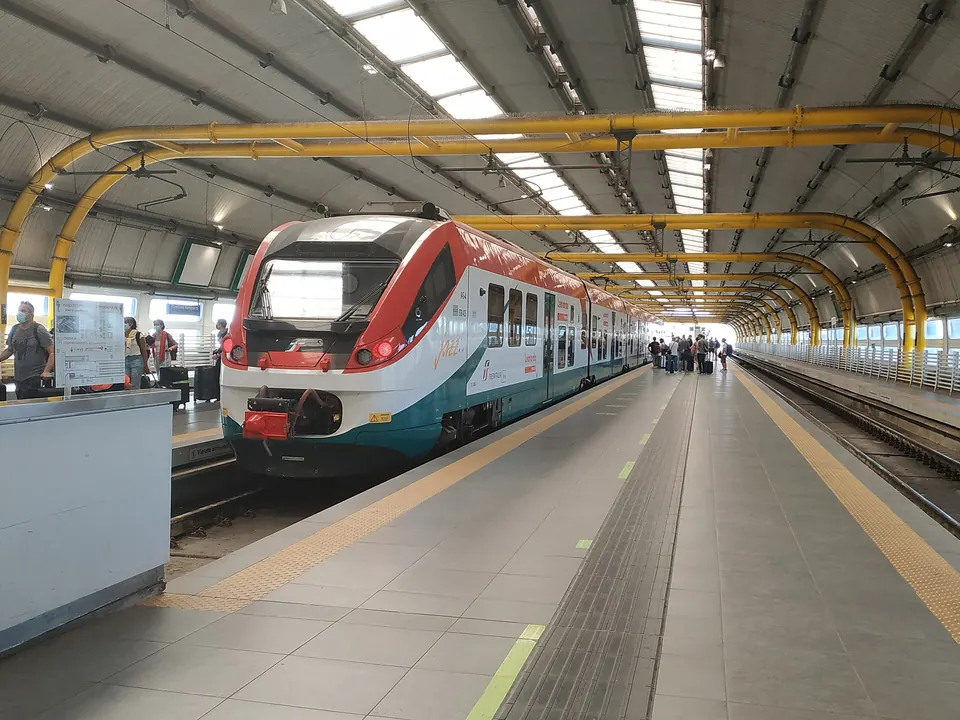
The Leonardo Express runs from the airport to Roma Termini in 32 minutes without stopping for €14 (about $15) one way, according to Trenitalia. It runs about every 15 minutes (every 30 minutes at some times of day). The first departure from the airport is at 5:38 am and the last at 11:27 pm. Trenitalia also offers a "Minigruppi" fare of 4 tickets for €40 (about $44).
If your accommodation is near Trastevere, Ostiense or Tiburtina, the FL1 regional train may be more convenient: according to Aeroporti di Roma, it serves other Roman stations, including Roma Tiburtina, every 15 minutes on weekdays and every 30 minutes on weekends and public holidays.
Timetables, fares and options from Ciampino are covered in our article on the train from Fiumicino and Ciampino airports to central Rome.
Getting to Rome by train from Paris
There is no direct Paris–Rome train and no night train: the last Paris–Italy sleeper (Thello) stopped running in 2020, according to Seat61. The journey takes a day with a change in northern Italy, over a route of about 900 miles (1,450 km).
Option 1: Frecciarossa via Milan (the simplest)
Trenitalia runs direct Frecciarossa trains from Paris Gare de Lyon to Milano Centrale, two round trips a day, with stops at Lyon, Chambéry, Saint-Jean-de-Maurienne, Modane, Oulx and Turin. Allow about 7 hours to Milan, then roughly 3 h 10 on a Frecciarossa to Roma Termini. Seat61 gives this sample timetable: leave Paris at 7:30 am, arrive in Milan at 2:11 pm, connect at 2:30 pm, arrive in Rome at 5:40 pm.
Starting prices quoted by Seat61: from €35 (about $39) in Standard for Paris–Milan and from €29.90 (about $33) for Milan–Rome. Fares rise as trains fill up, so book early on the Trenitalia or SNCF Connect website.
Option 2: TGV INOUI via Turin
SNCF also runs TGV INOUI trains Paris–Turin–Milan. The TGV arrives at Milano Porta Garibaldi, not Milano Centrale: check the station on your ticket before planning your connection. To reach Rome, the easiest choice is often to change in Turin. Seat61 gives an example of leaving Paris at 6:45 am, arriving in Turin at 12:23 pm and reaching Rome at 6:10 pm, with Paris–Turin fares from €39 (about $43) in 2nd class.
Option 3: via Switzerland
When the French Alps line is closed, Switzerland remains: a TGV Lyria to Geneva or Zurich, then a train to Milan and a Frecciarossa to Rome. Allow close to 13 hours in total. It is also the natural route for travelers starting in French-speaking Switzerland.
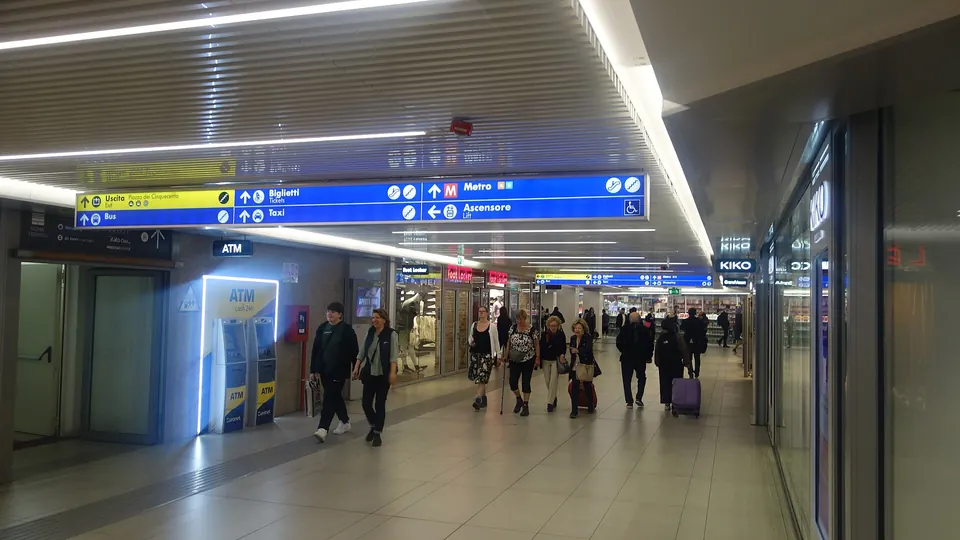
On arrival, Roma Termini is the city's largest station. Metro lines A and B cross there, and many hotels are within walking distance.
Driving to Rome: route, tolls and tunnels
From Paris, the road is about 880 to 891 miles (1,420 to 1,434 km) depending on the route planner, or 12 to 14 hours of driving not counting stops and traffic. The classic route takes the motorway to the Arve valley, the Mont Blanc tunnel, then the Aosta Valley and Italy's A1 motorway via Milan, Bologna and Florence. Mappy estimates tolls plus fuel at roughly €220 to €280 (about $242 to $308) for a diesel car, depending on the option chosen. You will drive on the right, as at home.
- Mont Blanc tunnel: €55.80 (about $61) one way for a car from France (2026 rate listed by the TCS). The round trip, valid for a limited time, is better value if you return through the same tunnel.
- Closures: the operator ATMB has not announced a long closure for 2026, but the tunnel closes on some nights for maintenance (usually 10 pm to 6 am). Check the calendar on the ATMB website before you leave.
- Alternative: the Fréjus tunnel, via the Maurienne and Turin. Its tolls rose by 1.19% in 2026, like those of Mont Blanc.
Over 870 miles (1,400 km), plan an overnight stop, for example in the Aosta Valley, Emilia-Romagna or Tuscany.
Can you drive in central Rome?
In practice, no. The historic center is a ZTL (limited traffic zone) monitored by cameras at the entrances (varchi). According to the Italian sources we consulted, the ZTL Centro Storico is active Monday to Friday from 6:30 am to 6 pm and on Saturday from 2 pm to 6 pm, with an added night period on Friday and Saturday evenings. The Tridente (around the Spanish Steps) has longer hours. Visitors can only enter if their hotel inside the zone has registered their license plate in advance. The safest approach is to leave the car in a parking garage outside the ZTL and continue by metro, bus or on foot. Illuminated signs at the entrances show whether the zone is active ("varco attivo").

Getting to Rome by bus
FlixBus runs direct coaches between Paris and Rome. The advertised average journey is about 20 hours, with several departures a day, overnight and daytime, according to the route page. Prices vary widely depending on when you book. The bus is often cheaper than a flight or train booked late, but a night on a coach is more tiring than a two-hour flight: compare the total cost, including the lost night.
Entry requirements for US citizens
US citizens need a valid passport to enter Italy, which is in the Schengen Area. You can stay up to 90 days in any 180-day period in the Schengen Area without a visa. Check the official ETIAS page and the US State Department's Italy page before you travel, as the rules for visa-exempt visitors are changing. A few points that apply to anyone:
- Minors need their own passport. A French family record book is not a travel document.
- A minor living in France who travels without their parents needs an exit authorization (AST).
- Italy uses Type C and F plugs at 230 V: bring an adapter for US devices.
Low-cost airlines often check documents at boarding, and a non-compliant document can stop you from getting on the plane.
Plane, train or car: which should you choose?
- Weekend or 3 to 4 day stay: fly to Fiumicino, then take the Leonardo Express. It is the only option that really leaves you time on the ground.
- A week or more, without flying: the train via Milan or Turin. You can break the journey in Turin or Milan.
- Tour of Italy (Tuscany, Umbria, Lazio): the car, as long as you park it as soon as you reach Rome. In the city, it is more of a burden than a help.
- Tight budget and flexible dates: the bus, or a train booked far ahead at the starting fares.
Frequently asked questions
How long does it take to get to Rome from Paris?
Is there a direct train from Paris to Rome?
Do US citizens need a visa to go to Rome?
How do you get from Fiumicino airport to central Rome?
Can you drive into the historic center of Rome?
Sources
- Seat61 – Paris to Rome by train
- Trenitalia – Leonardo Express
- Aeroporti di Roma – Trains from Fiumicino
- France Diplomatie – Italie : entrée et séjour
- Rail Europe – Frecciarossa France & Italy
- TCS – Fermetures et prix du tunnel du Mont-Blanc
- ATMB – Tarifs au 1er janvier 2026 (TMB)
- Trans.info – Tunnels du Mont-Blanc et du Fréjus en 2026
- Mappy – Itinéraire Paris Rome
- FlixBus – Bus Paris Rome
- Roma Mobilità – ZTL
Facts checked against these sources on November 9, 2026.