Things to Do in Northern Sardinia: Top Sights from Gallura to Alghero
Photo : Daniel Ventura · CC BY-SA 3.0 · Wikimedia Commons
Northern Sardinia is best seen in two parts. In the north-east, Gallura brings together the Costa Smeralda, the La Maddalena archipelago, the granite rocks of Capo Testa and the giants' tombs of Arzachena. In the north-west you'll find Alghero, Neptune's Grotto, La Pelosa beach, the park island of Asinara and Castelsardo. A week with a car lets you see both coasts. Two visits need to be booked ahead: La Pelosa and Neptune's Grotto.
The north of the island covers two very different areas. In the east is Gallura, with its granite, coves and islands. In the west, the Sassarese and the Logudoro offer limestone cliffs, fortified towns and the nuraghe heartland. To place this region within the whole island, see our complete guide to Sardinia. The sights below run from north-east to north-west, in the natural order of a road trip.
Things to do in northern Sardinia: the essentials at a glance
| Site | Area | Why go | Good to know |
|---|---|---|---|
| Costa Smeralda | North-east | Coves, Porto Cervo | Beaches are very busy in summer |
| La Maddalena archipelago | North-east | Marine national park, boat trips | Ferry from Palau; no landing on Budelli |
| Capo Testa | North-east | Sculpted granite, Valle della Luna | About 4 km (2.5 miles) from Santa Teresa Gallura |
| Arzachena archaeological park | North-east | Nuraghi and giants' tombs | Several separate sites; go by car |
| Alghero | North-west | Catalan old town, ramparts | Pedestrian historic centre |
| Neptune's Grotto | North-west | Sea cave at Capo Caccia | 654 steps or a boat; depends on sea conditions |
| La Pelosa (Stintino) | North-west | White-sand beach | Paid reservation required in season |
| Asinara National Park | North-west | Protected island with no cars | Boat from Stintino or Porto Torres |
| Castelsardo | North-west | Hilltop medieval village | Elephant Rock nearby |
| Nuraghe Santu Antine | Inland | The great nuraghe of the Valley of the Nuraghi | At Torralba, inland |
Visiting north-east Sardinia: Gallura
Costa Smeralda and Porto Cervo
The Costa Smeralda is a resort area created by a consortium that Prince Karim Aga Khan founded in 1962. Its centre is Porto Cervo, between the Gulf of Pevero and Capriccioli. The buildings are low, white and sunk into the scrub. On the hill, the Stella Maris church was designed by the architect Michele Busiri Vici. The coast's main appeal remains its coves: Capriccioli, with fine sand edged by pink or ochre granite; Liscia Ruja, with small bays framed by junipers; and Cala di Volpe, Grande Pevero and Romazzino, about 2 km (1.2 miles) south of Porto Cervo. In high season, arrive early in the morning, because beach car parks fill up fast.
The La Maddalena archipelago
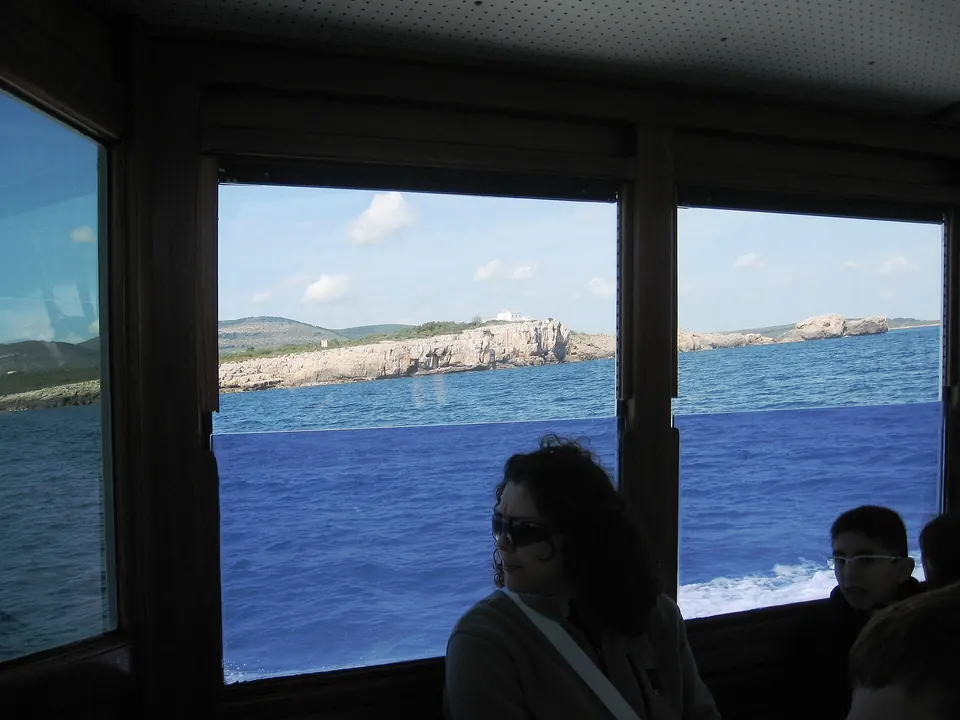
The archipelago is a national park. The starting point is Palau, where Delcomar and Maddalena Lines ferries reach the island of La Maddalena in roughly 15 to 20 minutes. They carry cars too. On the island, a bridge links La Maddalena to Caprera. To see the other islands, the simplest option is an organised boat excursion from Palau or La Maddalena. Places go quickly in summer, so book ahead.

Santa Teresa Gallura and Capo Testa
Santa Teresa Gallura looks out over the Strait of Bonifacio. Its town beach, Rena Bianca, stretches for about 700 metres of very white sand. About 4 km (2.5 miles) away, the Capo Testa headland is joined to the mainland by an isthmus. Its two beaches, Rena di Ponente and Rena di Levante, lie on either side, on two different seas. On the west side, the Valle della Luna (Cala Grande) is a granite valley bleached by erosion. It's popular with climbers and swimmers. This natural site has no facilities: bring sturdy shoes for walking on the rocks.
Santa Teresa is also the closest port to Corsica. The crossing to Bonifacio takes between 50 minutes and an hour, which makes a day trip possible.
The Arzachena archaeological park
Around Arzachena, several prehistoric sites can be visited separately, a few kilometres from one another:
- Li Muri necropolis: circular tombs dated to the late 4th millennium BC, the oldest remains in the park;
- La Prisgiona nuraghe: a tower and its Bronze Age village, on a granite ridge above the Capichera valley;
- Coddu Vecchiu giants' tomb: about 700 metres from La Prisgiona, the largest tomb of this type in the area, with a tall stele at the front;
- Li Lolghi: another giants' tomb, reached by a dirt track;
- Nuraghe Albucciu, the Moru tomb and the Malchittu complex with its small temple, along the road to Olbia.
According to the official portal italia.it, Albucciu, Moru, Malchittu, La Prisgiona and Coddu Vecchiu open from 9am to 7pm. Li Muri and Li Lolghi open from 10am to 6pm. These hours change with the season: check them before you go with the operator, Ge.Se.Co Arzachena.
What to see in north-west Sardinia
Alghero, the Catalan town
The best part of Alghero is its historic centre, enclosed by ramparts on the seafront. You explore it on foot, since it is almost closed to cars: park on the edge of the old town. You can walk along the bastions from Piazza Sulis to the defence towers. The Porta Terra tower, the town's former main entrance, now houses an information point. Also visit Santa Maria Cathedral and the cloister of San Francesco, in Catalan Gothic style. Around the town are several prehistoric sites: the Anghelu Ruju necropolis, the domus de janas of Santu Pedru, and the nuragic villages of Palmavera and Sant'Imbenia.
Capo Caccia and Neptune's Grotto
Neptune's Grotto opens at the foot of the Capo Caccia cliffs. There are two ways to get there:
- By land, down the 654 steps of the Escala del Cabirol. From June to October, you must leave your car at the Casa Gioiosa car park and take a shuttle, paid separately, arriving one hour before your visit time. From November to May, you can park directly on the esplanade, arriving at least 40 minutes before. The ARST bus line 9321 links Alghero to the grotto all year.
- By sea, by boat from Alghero harbour (Banchina Dogana) or from the Cala Dragunara jetty. The crossing takes about 40 minutes and the service runs from April. The boat ticket and the grotto entrance are sold separately.
The visit is guided, leaves on the hour and lasts about 30 minutes. According to the grotto's official price list, entry costs €18 (about £15) at the full rate and €10 (about £8.50) for ages 6 to 17. It is free under 6. This winter, the grotto opens from 10am to 3pm. It closes on Thursdays from 12 November to 18 March, and on 24 and 25 December. Hours get longer in season.
Stintino and La Pelosa beach
At the north-western tip of the island, La Pelosa faces the Aragonese tower and the island of Asinara. To limit wear on the sand, the municipality of Stintino has set a cap of 1,500 people per day. Reservation is required from 15 May to 15 October 2026, at €3.50 (about £3) per person per day. Children under 12 don't need to book. Each reservation covers a maximum of four people, and you can only make one reservation per day. Of the 1,500 places, 500 can be booked at any point in the season. The other 1,000 open two days before your chosen date, at 9am. Checks take place from 8am to 6pm, with a QR code to show at the entrance.
On the beach, a mat is required under your towel. Smoking, taking sand away and bringing a dog are all banned.
Asinara National Park
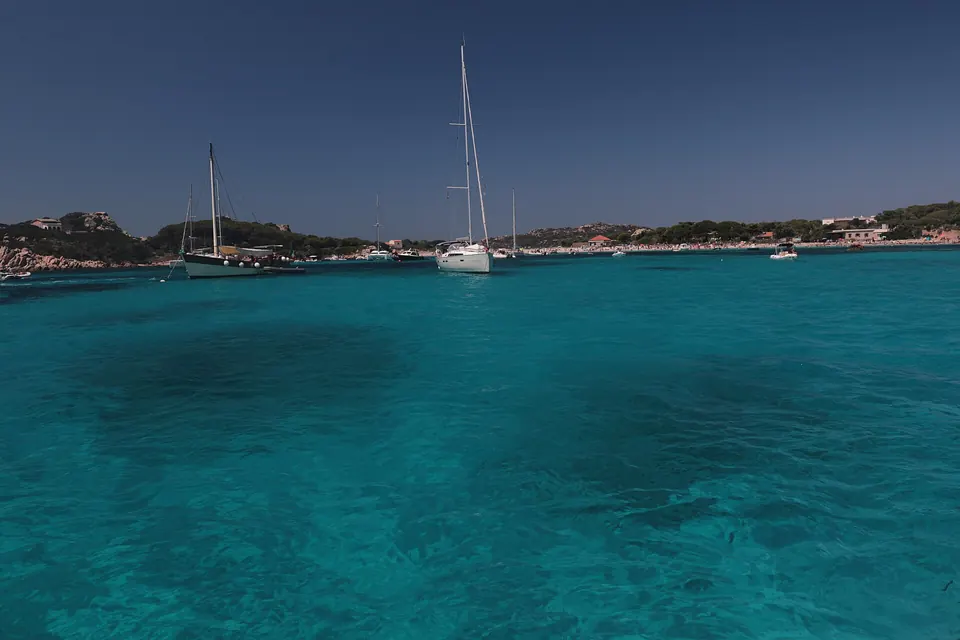
A former prison island, Asinara is now a national park. There are two ways to reach it. The first links Stintino to Fornelli in about thirty minutes, with several private companies and therefore more departures. The second links Porto Torres to Cala Reale with Delcomar, in about 1 hour 15 minutes. Cars cannot go to the island: you leave them at the port. Bicycles can be taken aboard, and you can also hire them at Fornelli. On the island, you get around by bus between Fornelli, Cala Reale and Cala d'Oliva, by guided 4x4, by small train or on foot with a guide. The official Asinara park website lists the approved operators. Bring water and sun protection. Also check the rule on pets, which were banned on the island in recent seasons.
Castelsardo and Elephant Rock
Castelsardo sits on a headland above the Gulf of Asinara. The Doria Castle, probably built in the late 13th century, houses the Museum of Mediterranean Weaving (Museo dell'Intreccio Mediterraneo). A little lower down, the cathedral of Sant'Antonio Abate, dating from 1586, has a bell tower that overlooks the sea. About 4 km (2.5 miles) away, on the road to Sedini, the Roccia dell'Elefante (Elephant Rock) is a boulder whose shape resembles an elephant. It contains domus de janas, tombs cut into the rock. For a swim, Lu Bagnu beach is about 2.5 km (1.6 miles) away.
Inland: the Valley of the Nuraghi
If you have an extra half day between Castelsardo and Alghero, go to Torralba to see the Nuraghe Santu Antine. Its central tower is 17 metres high. It originally had three floors and is surrounded by a bastion with three towers. The site was built between the 16th and 9th centuries BC and also includes a village of 14 huts. It lies in the Valley of the Nuraghi, one of the areas of Sardinia with the most prehistoric structures: about thirty nuraghi and ten giants' tombs, according to the Sardinia regional tourist office. According to local press, the ticket also gives access to the Valley of the Nuraghi museum in Torralba. Check current prices with the site.
How many days do you need in northern Sardinia?
Allow a week to do both coasts without spending your days driving. Here is an itinerary from east to west, which you can reverse if you arrive via Porto Torres or Alghero:
| Day | Stop | Plan |
|---|---|---|
| 1 | Olbia → Costa Smeralda | Porto Cervo, coves of Capriccioli or Liscia Ruja |
| 2 | Arzachena → Palau | Li Muri, La Prisgiona, Coddu Vecchiu |
| 3 | La Maddalena | Ferry from Palau, boat tour of the archipelago |
| 4 | Santa Teresa Gallura | Capo Testa, Valle della Luna (or a return trip to Bonifacio) |
| 5 | Castelsardo → Stintino | Doria Castle, Roccia dell'Elefante |
| 6 | Stintino | La Pelosa (reserved) or a day on Asinara |
| 7 | Alghero | Neptune's Grotto in the morning, old town at sunset |
If you only have three or four days, pick one coast. The north-east suits a trip built around sea and islands, with a base in Palau or Santa Teresa. The north-west mixes town, beach and natural sites, with a base in Alghero.
Getting to and around northern Sardinia
- By ferry from France: Corsica Ferries links Toulon to Porto Torres all year. A Nice–Porto Torres line runs in summer, and a Toulon–Golfo Aranci (near Olbia) service operates in high season.
- Via Corsica: Bonifacio–Santa Teresa Gallura ferries (Moby, Ichnusa Lines) take between 50 minutes and an hour.
- By air: Olbia and Alghero airports each serve one half of the north.
- On the ground: a car remains essential for the beaches, the archaeological sites and Capo Caccia. ARST buses cover some routes, for example Alghero to Neptune's Grotto.
Entry rules: UK passport holders can stay in the Schengen area for up to 90 days in any 180-day period. Your passport must have been issued less than 10 years before the day you enter and be valid for at least 3 months after the day you plan to leave. For the latest on the EES and ETIAS, see the official GOV.UK travel advice for Italy before you go.
Frequently asked questions
What is the best part of northern Sardinia?
Do you need to book La Pelosa beach?
Can you visit the pink beach on Budelli?
How do you reach Neptune's Grotto without the 654 steps?
How many days do you need in northern Sardinia?
Sources
- La Pelosa – site officiel (réservation, règles 2026)
- Grotta di Nettuno – Opening Times and Booking
- Grotta di Nettuno – Getting there
- Grotta di Nettuno – Admission fees
- Parco Nazionale dell'Asinara – Visiting the park
- Sardegna Turismo – Castelsardo
- Sardegna Turismo – The Emerald Coast
- Sardegna Turismo – Nuraghe Santu Antine
- Sardegna Turismo – Cala Grande Valle della Luna
- Sardegna Turismo – Alghero
- Italia.it – Parco archeologico di Arzachena
- Unione Sarda – La Spiaggia Rosa dell'Isola di Budelli
- Spiagge.it – Spiaggia Rosa di Budelli
- Unione Sarda – Nuraghe Santu Antine, come arrivare
- Ferryhopper – Santa Teresa Gallura – Bonifacio
- Ferryhopper – Palau – La Maddalena
- Ferryhopper – Traghetti Asinara
- Ferryhopper – Porto Torres – Toulon
Facts checked against these sources on 18 November 2026.