Best Villages in Tuscany on a Map: 6 Areas, 30 Certified Borghi and the Must-Sees
Photo : Thomas Quine · CC BY 2.0 · Wikimedia Commons
On a map, the best villages in Tuscany fall into six areas: Siena and Chianti, Val d'Orcia and Valdichiana, the southern Maremma, Volterra and the coast, the province of Arezzo, and the north (Garfagnana, Lunigiana, Mugello). The "I Borghi più belli d'Italia" label covers 30 villages in the region, but the best known (San Gimignano, Pienza, Monteriggioni, Volterra) are not on it. This guide combines both lists and explains how to get from one village to the next.
Search for the "best villages in Tuscany" on a map and you end up with two lists that barely overlap. On one side is the official label of the association I Borghi più belli d'Italia, which picks small villages that are often little known. On the other are the villages everyone wants to see (San Gimignano, Pienza, Monteriggioni, Volterra), which are bigger or simply not members. This article places them area by area so you can group your visits without crisscrossing the region. To fit these stops into a full trip (art cities, seasons, where to stay), start with our Tuscany travel guide.
Map of the best villages in Tuscany: the six areas to know
Distances look short on paper, but hill roads are slow. In most cases it is better to settle in one area and make day trips than to change accommodation every night. The table below works as a reading map: each row is a coherent geographic zone.
| Area (on the map) | Headline villages | Certified "Borghi più belli" villages | Access without a car |
|---|---|---|---|
| Siena and Chianti (centre) | San Gimignano, Monteriggioni | Montefioralle, San Donato in Poggio | Yes for San Gimignano (train + bus) |
| Val d'Orcia and Valdichiana (south-east of Siena) | Pienza | Buonconvento, Cetona, San Casciano dei Bagni, Lucignano | Partial (train then bus for Pienza) |
| Southern Maremma and Monte Amiata (far south) | Pitigliano, Sorano | Pitigliano, Sovana, Santa Fiora, Montemerano, Capalbio, Porto Ercole, Giglio Castello | Difficult, car recommended |
| Volterra and the Etruscan Coast (west) | Volterra | Suvereto, Campiglia Marittima, Populonia, Casale Marittimo, Montescudaio | Bus (no train station at Volterra) |
| Arezzo, Casentino, Valtiberina, Valdarno (east) | Anghiari | Anghiari, Poppi, Raggiolo, Loro Ciuffenna, Castelfranco di Sopra | Partial |
| North: Garfagnana, Lunigiana, Mugello | Barga | Barga, Castiglione di Garfagnana, Coreglia Antelminelli, Mulazzo, Scarperia, Palazzuolo sul Senio, Montaione | Partial |
Montaione is grouped with the north here for simplicity, but it actually lies between Florence and San Gimignano, in the Valdelsa: it combines more easily with the Siena and Chianti area.
The 30 Tuscan villages with the "I Borghi più belli d'Italia" label
The association, created with ANCI (the Italian association of municipalities), only accepts villages whose historic centre has fewer than 2,000 inhabitants and where at least 70% of buildings date from before 1939, according to Visit Tuscany's presentation. That explains why San Gimignano and Volterra are missing: they are too populous. The official list for Tuscany has 30 villages, each with its own page. Here is how they break down by province, useful for placing them on your own map.
| Province | Certified villages |
|---|---|
| Arezzo | Anghiari, Castelfranco di Sopra, Loro Ciuffenna, Lucignano, Poppi, Raggiolo |
| Florence | Montaione, Montefioralle, Palazzuolo sul Senio, San Donato in Poggio, Scarperia |
| Grosseto | Capalbio, Giglio Castello, Montemerano, Pitigliano, Porto Ercole, Santa Fiora, Sovana |
| Livorno | Campiglia Marittima, Populonia, Suvereto |
| Lucca | Barga, Castiglione di Garfagnana, Coreglia Antelminelli |
| Massa-Carrara | Mulazzo |
| Pisa | Casale Marittimo, Montescudaio |
| Siena | Buonconvento, Cetona, San Casciano dei Bagni |
Siena and Chianti: San Gimignano, Monteriggioni and the Chianti villages
San Gimignano
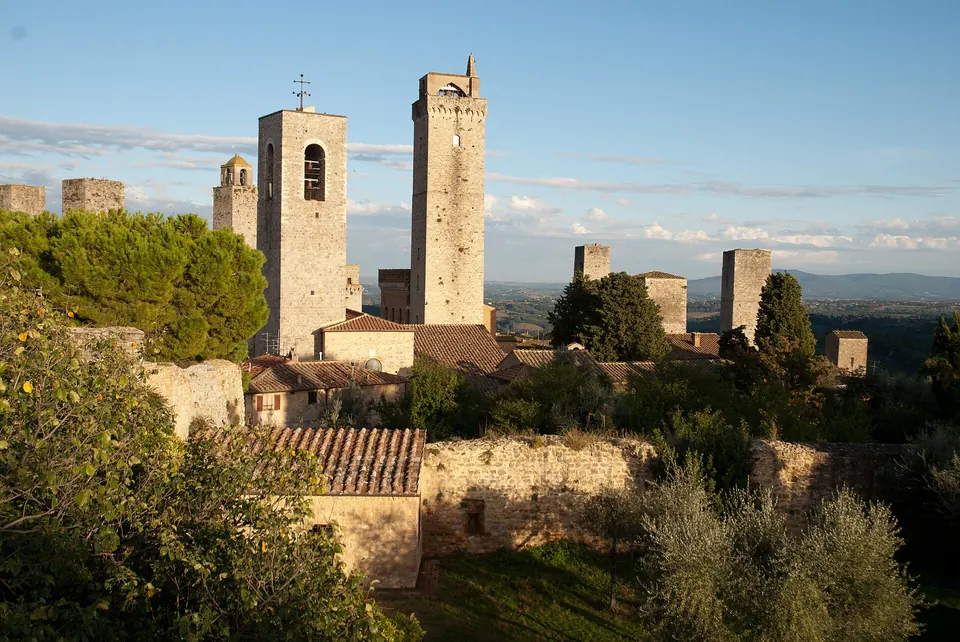
The historic centre has been a UNESCO World Heritage Site since 1990. Visit Tuscany cites 65 towers in the Middle Ages, 13 of them still standing (some counts say 14). The tallest, the Torre Grossa, is 54 metres high. Built in 1311, it can be climbed. The Palazzo Comunale houses the municipal museum and picture gallery (works by Pinturicchio and Benozzo Gozzoli), as well as the Dante room with Lippo Memmi's Maestà. The Collegiate Church, completed in 1148, holds Florentine-school frescoes and wooden statues by Jacopo della Quercia.
Monteriggioni
Built by Siena between 1213 and 1219 on a hilltop overlooking the Via Cassia, this fortified village is ringed by walls about 570 metres long, studded with 14 towers. Dante mentions it in the Inferno (Canto XXXI). One stage of the Via Francigena links San Gimignano to Monteriggioni on foot, about 30 km (19 miles) according to Visit Tuscany. By car, the two villages are easy to see on the same day from Siena.
Montefioralle and San Donato in Poggio
These are the two certified villages of Chianti. Montefioralle is a hamlet of Greve in Chianti, while San Donato in Poggio belongs to Barberino Tavarnelle and is organised around its parish church (pieve). Both fit easily into a Florence–Siena drive along the wine roads.
Val d'Orcia and Valdichiana: Pienza and the villages south of Siena
Pienza
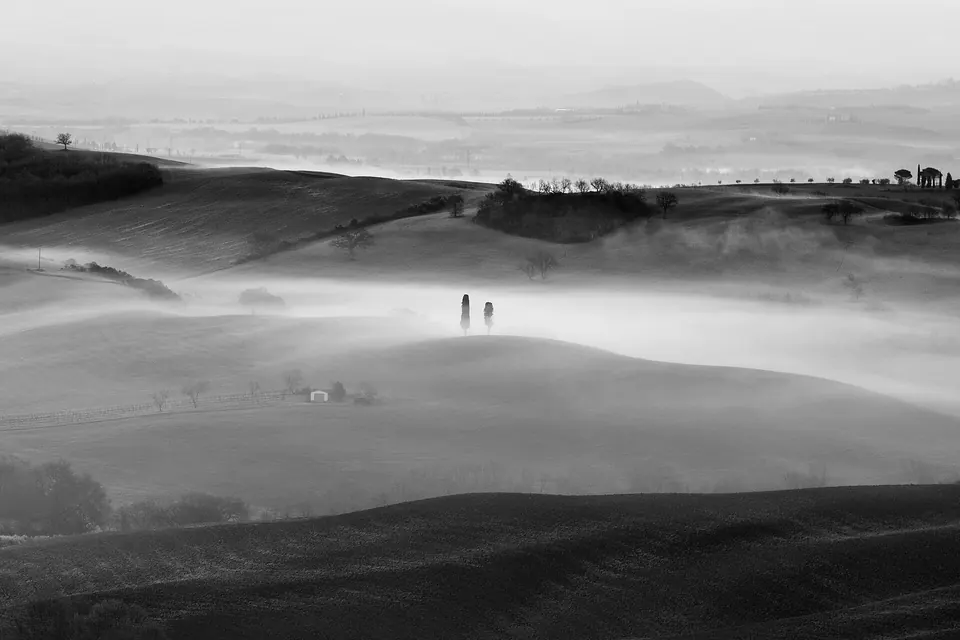
Pope Pius II (Enea Silvio Piccolomini) had his birthplace, Corsignano, rebuilt in the 1450s and 1460s. He entrusted the work to the architect Bernardo Rossellino and renamed it Pienza. UNESCO listed the centre in 1996 as the first application of Renaissance humanist urban planning, then the whole Val d'Orcia in 2004. On the Piazza Pio II, the cathedral and the Palazzo Piccolomini face each other. Pienza is about 50 km (31 miles) from Siena and celebrates its pecorino cheese every September. Without a car, Visit Tuscany suggests taking the train to Chiusi-Chianciano Terme or Buonconvento, then a bus.
Buonconvento, Cetona, San Casciano dei Bagni, Lucignano
These four certified villages dot the south of the province of Siena and the Valdichiana. Buonconvento has the advantage of a train station, which also serves as a starting point for Pienza. Cetona and San Casciano dei Bagni lie farther south, near the Umbrian border. Lucignano, in the Arezzo part of the Valdichiana, pairs better with the Arezzo area.
Southern Maremma: Pitigliano, Sovana, Sorano and Monte Amiata
Pitigliano
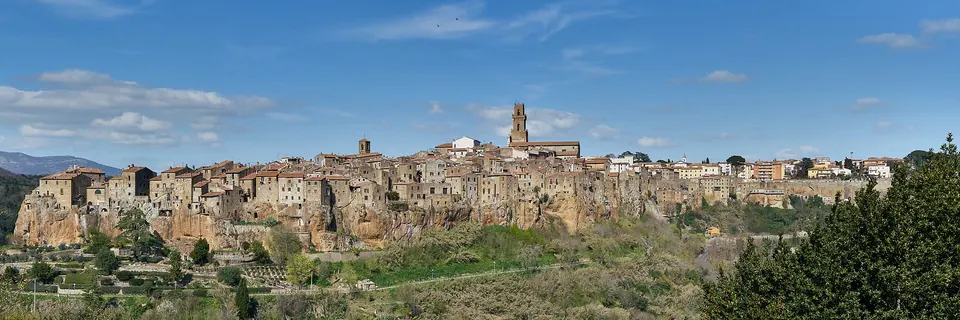
The village clings to a tuff spur at 313 metres above sea level, its houses continuing the cliff face vertically. It is nicknamed "Little Jerusalem" because of its Jewish community, present since the 15th century. You can visit the synagogue, the Jewish culture museum and the unleavened bread oven. Around the village, the vie cave are paths cut into the tuff in Etruscan times, some longer than a kilometre with walls up to 20 metres high. A 10.2 km walking route links Pitigliano to Sovana along these paths, according to the official Pitigliano page.
Sovana and Sorano
Sovana, a certified village, is known for its Etruscan necropolis. Nearby Sorano is home to the Città del Tufo archaeological park. These three villages can be seen together in a day or two and make up the most homogeneous area in the region.
Santa Fiora, Montemerano, Capalbio, Porto Ercole, Giglio Castello
Santa Fiora is on the slopes of Monte Amiata, Montemerano in the hinterland of Manciano, and Capalbio near the coast, to the south. Porto Ercole sits on the Argentario promontory. Giglio Castello, perched on the island of Giglio in the Tuscan archipelago, requires a ferry crossing and should be planned separately.
Volterra and the Etruscan Coast
Volterra
The ancient Etruscan Velathri was one of the main city-states of Etruria: its remains can be seen on the acropolis, near which stands a Roman theatre, outside the centre. The Guarnacci Museum is devoted to the Etruscans, and an ecomuseum presents alabaster working, a local speciality for centuries. Volterra has no train station; you have to come up by bus or car.
Suvereto, Campiglia Marittima, Populonia, Casale Marittimo, Montescudaio
These five certified villages stretch between Cecina and Piombino, a few kilometres from the sea. From the windows of the Rocca of Campiglia Marittima, you can see the sea. Populonia overlooks the Gulf of Baratti. This is the right area if you want to combine villages and beaches.
Province of Arezzo: Anghiari, Poppi and the Casentino
Anghiari, in the Valtiberina, the easternmost part of Tuscany, gave its name to the battle of 29 June 1440 between the Florentines and the Milanese. Leonardo da Vinci painted it in a fresco that is now lost. The old quarter of the Borghetto is surrounded by 16th-century walls. Close by, Sansepolcro is the birthplace of Piero della Francesca. Farther north, Poppi and Raggiolo are the two certified villages of the Casentino. Loro Ciuffenna and Castelfranco di Sopra are in the Valdarno, between Florence and Arezzo.
The north: Barga, Garfagnana, Lunigiana and Mugello
Barga, above the Serchio valley, is the best-known village in the area. From the square in front of its San Cristoforo cathedral, you see the rooftops, the hills and the Apuan Alps. The poet Giovanni Pascoli lived at Castelvecchio Pascoli, about 4 km (2.5 miles) away, and his house can be visited. Castiglione di Garfagnana and Coreglia Antelminelli round out the trip from Lucca. Mulazzo is the only certified village in Lunigiana, in the far north-west. North of Florence, Scarperia (and its Palazzo dei Vicari) and Palazzuolo sul Senio represent the Mugello.
How to link the villages: car, train and bus
A car remains the most flexible option, especially in the Maremma, Garfagnana and Casentino. Without a car, two classics work well:
- San Gimignano: regional train to Poggibonsi-S. Gimignano station, then an Autolinee Toscane bus from the station forecourt. On the Trenitalia site, choose "S. Gimignano Centro Storico" as your destination to buy train and bus on a single ticket. The bus portion costs €2.90 each way (about £2.50), added to the train fare.
- Pienza: train to Chiusi-Chianciano Terme or Buonconvento, then a bus. Check the timetables, which are less frequent on Sundays, on the Autolinee Toscane site.
Which itinerary for how many days?
These combinations follow the logic of the areas. You can chain them together or keep just one.
| Duration | Suggested base | Villages to group |
|---|---|---|
| 1 day | Siena or Florence | Monteriggioni + San Gimignano (+ San Donato in Poggio by car) |
| 2 days | Pienza or nearby | Pienza, Buonconvento, then Cetona or San Casciano dei Bagni |
| 2 to 3 days | Pitigliano | Pitigliano, Sovana, Sorano, Santa Fiora, Montemerano |
| 2 days | Coast, between Cecina and Piombino | Volterra, Suvereto, Campiglia Marittima, Populonia |
| 2 days | Arezzo | Anghiari, Poppi, Raggiolo, Lucignano |
| 1 to 2 days | Lucca | Barga, Castelvecchio Pascoli, Coreglia Antelminelli, Castiglione di Garfagnana |
With a week, two neighbouring areas are enough, for example Siena-Chianti then the Val d'Orcia, or the Val d'Orcia then the southern Maremma. That way you avoid spending more time on the road than in the villages.
Frequently asked questions
How many Tuscan villages have the "Most Beautiful Villages of Italy" label?
Is San Gimignano one of the Most Beautiful Villages of Italy?
Can you visit Tuscan villages without a car?
Which area should you pick for a first trip?
Sources
- I Borghi più belli d'Italia – Toscana (liste officielle)
- Visit Tuscany – I borghi toscani più belli d'Italia
- Visit Tuscany – San Gimignano
- Visit Tuscany – Monteriggioni
- Visit Tuscany – 5 reasons to visit Pienza
- Visit Tuscany – Pitigliano
- Visit Tuscany – Volterra
- Visit Tuscany – Anghiari
- Visit Tuscany – Barga
- Trenitalia – Treno + bus per San Gimignano
- La Nazione – San Gimignano, al via la nuova ZTL con varchi video controllati
Facts checked against these sources on 3 November 2026.